
“Night Windows” Sets the Scene for Private Worlds
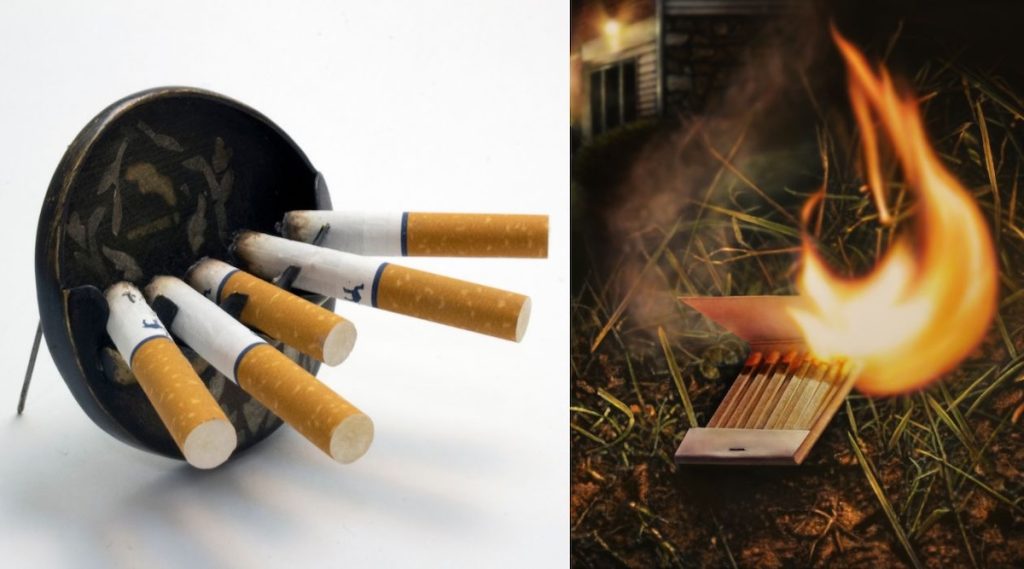
“Night Windows” is an introspective pairing of Natalie Lowe and Bruce Evans that turns the action of observing into the main point. On view through March 14, 2026 at Gravers Lane Gallery in Philadelphia, “Night Windows” brings together Evans’ uncanny photorealism and Lowe’s intimate sculptural worlds, and the result is a conversation about what we reveal, what we hide, and what we can’t help but imagine when we’re standing outside a lit window after dark.
The exhibition’s premise is beautifully distilled in its own framing: a couch becomes a brooch; a painting becomes an impossible photograph. That’s the friction point where “Night Windows” lives—between interior and exterior, craft and illusion, the private space we inhabit and the private spaces we project onto others. The title itself borrows from the luminous glow of windows after dark, and the show uses that familiar suburban imagery as a psychological doorway: the beckoning rectangle of light, the implied narrative, the sense that something is happening just out of reach.
The gallery is engaging the exhibition with two First Friday receptions—February 6 and March 6—from 5 to 8 p.m., with artist talks at 6:30 p.m.
“Night Windows” Through Bruce Evans’ Uncanny Photorealism
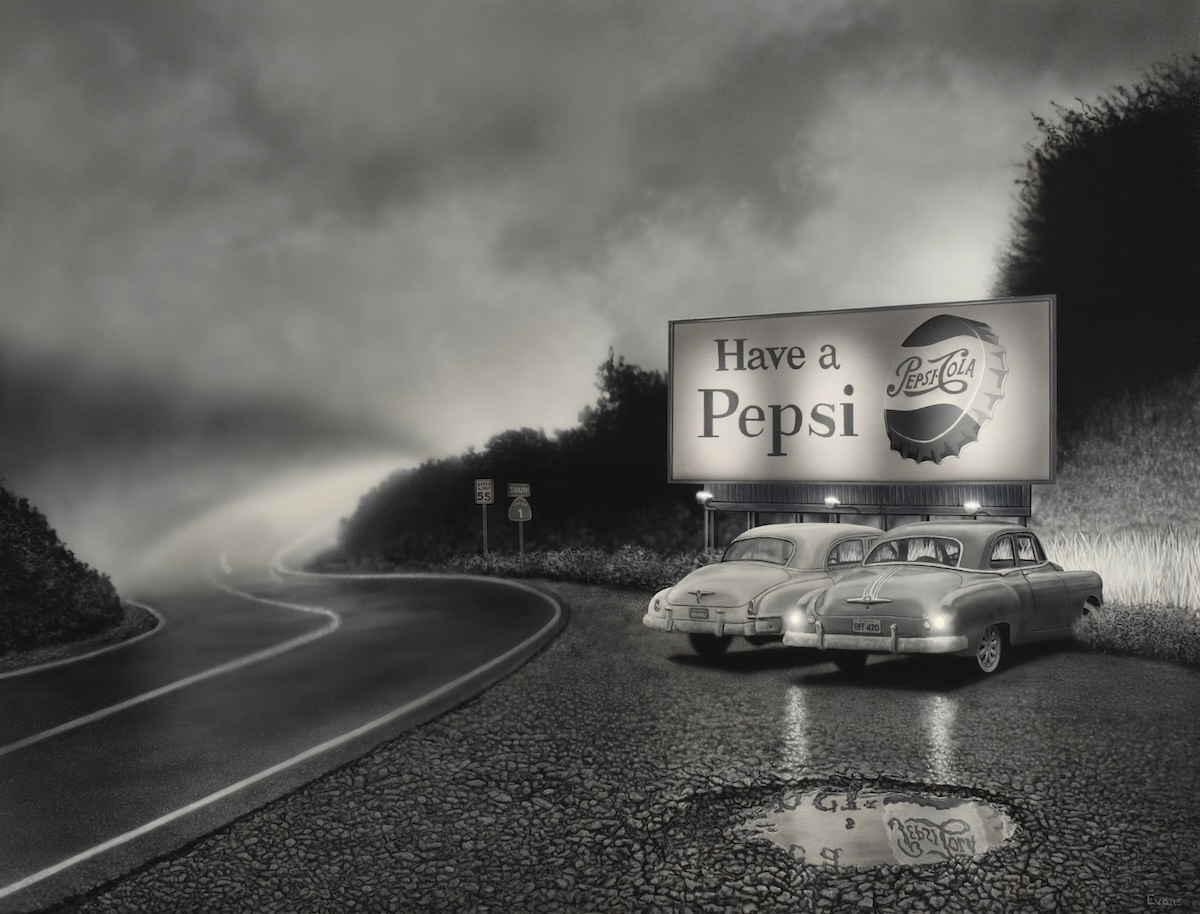
If you’ve ever looked at an image and felt the strange certainty that it’s both real and not real at the same time, you already understand the tension Bruce Evans has been cultivating for decades. Evans earned his BFA from Penn State University in 1973, and in 1976, he left his creative work at the university’s PBS-TV affiliate to pursue painting full-time. Since the early 1970s, he has developed a distinct visual language rooted in photorealism, surrealism, and an exceptionally refined command of the airbrush. In “Night Windows”, that technical command is virtuosityand the engine that makes the “impossible photograph” idea feel believable.
Evans’ approach is openly hybrid: he doesn’t compete with the camera so much as use it as a tool. Photography, Photoshop, and composited imagery shape the idea before the paint ever begins. Then comes the method: an airbrushed monochromatic underpainting followed by multiple layers of transparent color, built to create depth, luminosity, and a subtle unease. One of his most compelling strategies, especially within the conceptual frame of “Night Windows”, is the way he manipulates depth of field. By selectively sharpening or softening areas beyond what a camera could plausibly do, he produces images that read as photographic at first glance, but become imaginatively constructed as you stay with them.
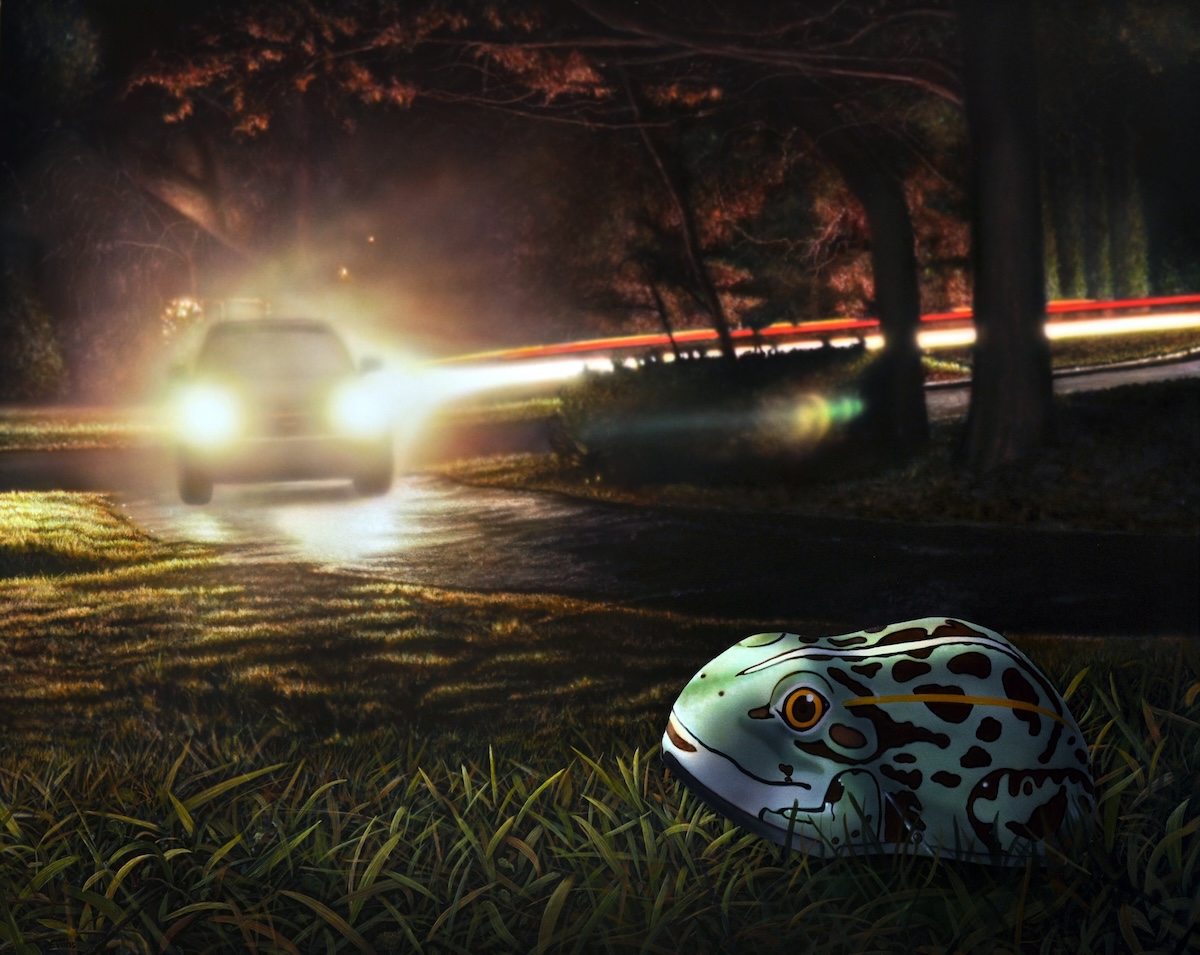
That “stay with it” quality is echoed in Evans’ own words, which function like a key to the entire exhibition. “On some level, I am always painting. A walk in the woods, a round of golf, a conversation with a friend, or just staring out of the window, the door is always open for an idea that inspires the next work.”
Evans concludes, “Once an idea takes shape, the painting is executed with hyper-focused attention to lighting and detail, with every hair in place, every curve, and every glint of shadow exactly as nature demands. I know the work is going well if, during the process, I lose all sense of time and self. Painting is just one of many ways to communicate ideas. Some people express their imaginative thoughts through writing, I paint.”
In the context of “Night Windows”, that emphasis on windows, observation, and time slipping away feels almost too perfect—because Evans’ paintings ask you to renounce your sense of time in exactly the way he describes.
“Night Windows” With Natalie Lowe’s Sculptural Domestic Intimacy
Where Evans builds illusion through light and focus, Natalie Lowe builds intimacy through material and scale. Lowe is an intermedia artist, metalsmith, and sculptor based in the Midwestern United States. After earning her BFA in Metalsmithing from Southern Illinois University Edwardsville, she pursued an MFA at Ball State University, developing installation and mixed-media practices centered on domestic architecture, miniature worlds, and emotional interiority. In “Night Windows”, her work occupies that charged space between adornment and sculpture—objects that can feel wearable, architectural, or both, as if the private home has been compressed into a talisman.
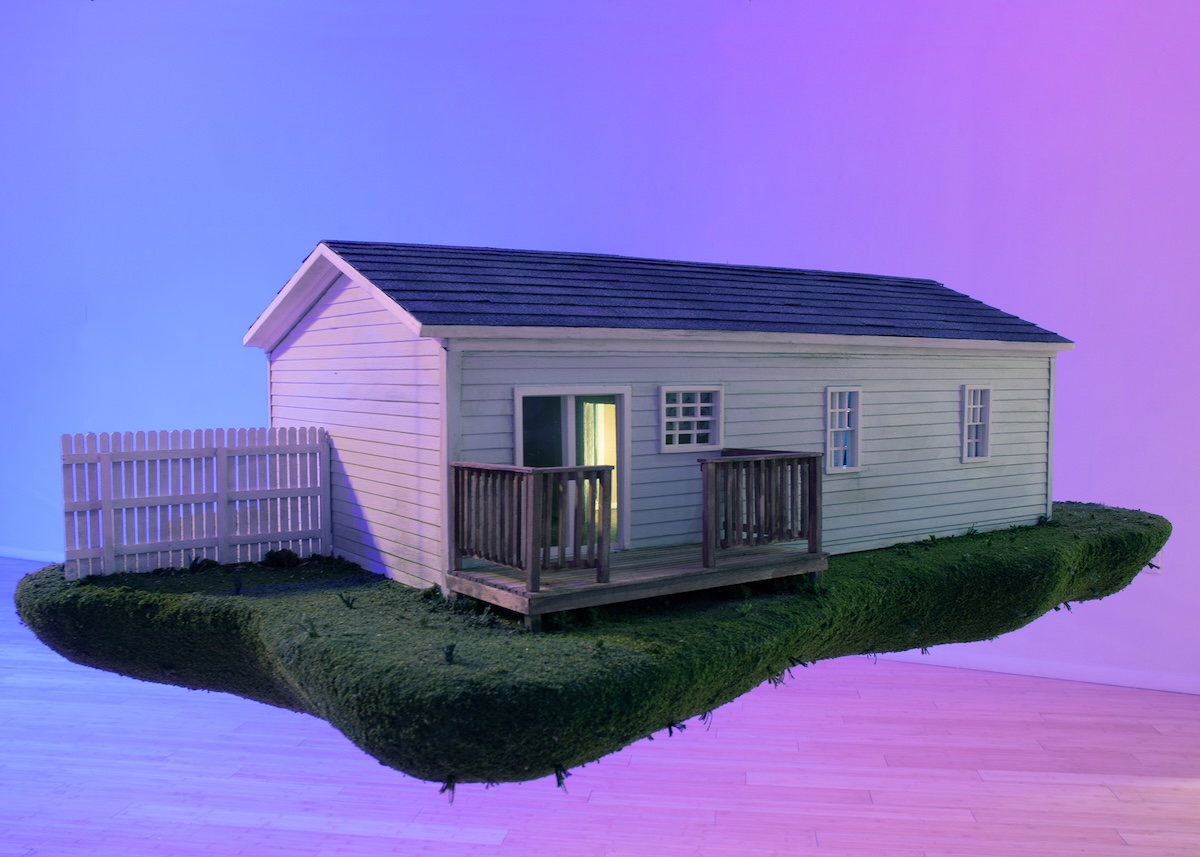
Lowe’s thematic core is suburban psychology: boundaries that are both literal and unspoken, and the quiet distance that can exist between neighbors who live a few yards apart. Her statement lands with the specificity of lived experience: “Having grown up in a suburban landscape, I am inspired by the spoken and unspoken boundaries I encountered there and the quiet distance I came to expect from our neighbors. Property lines and street curbs determine the path home, as dim streetlights reveal fragments of each house in passing.”
Lowe continues, “Passersby are beckoned to gaze into lit windows, only for their views to be obscured by curtains and blinds. In this work, I have reflected upon the material reality of typical suburban structures and their interiors, alongside the dreams we harbor for ourselves and the private lives we imagine for our neighbors. As a shelter becomes an extension of the self, we adorn our homes with that which reminds us of who we were, who we are, and who we hope to be. It is this social dialogue and its conflicts, between our fantasies and realities, that this work explores.”
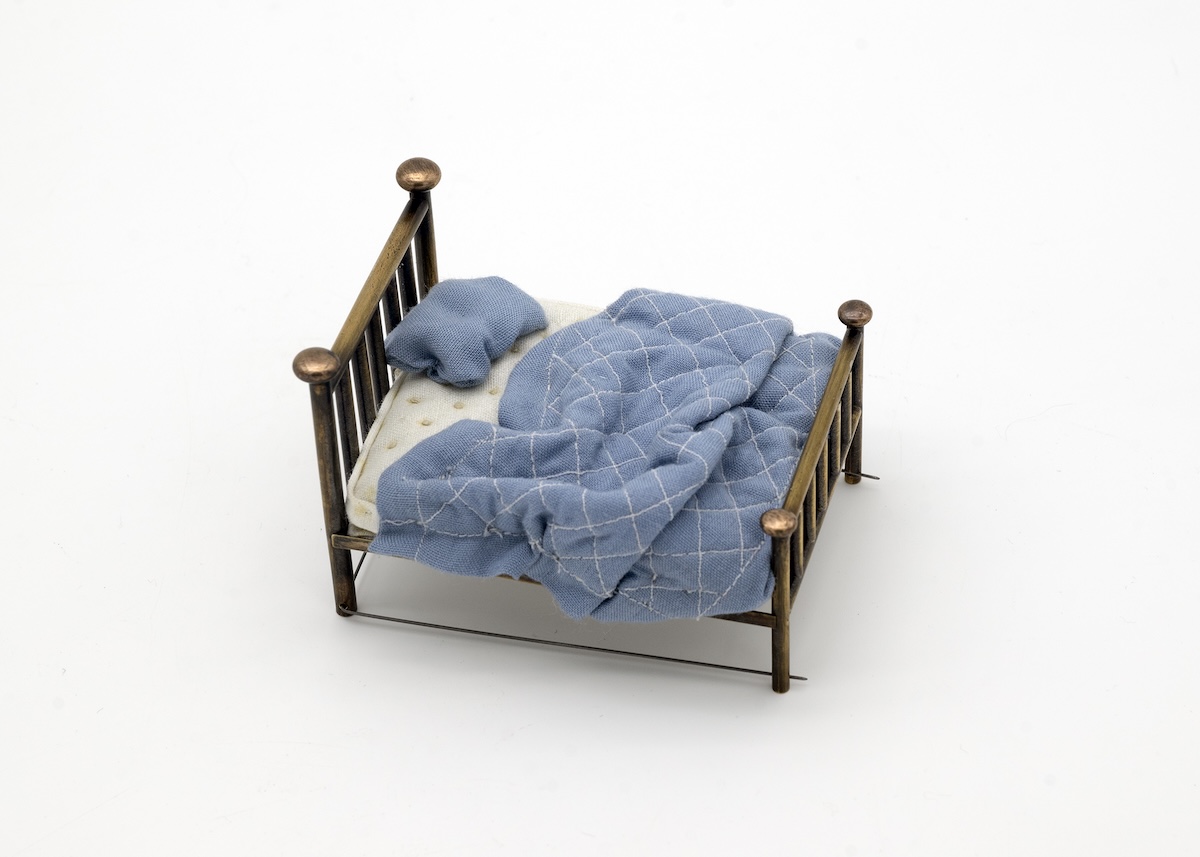
That last idea—fantasies versus realities—is the emotional glue of “Night Windows”. Lowe’s thesis work, House Dreams, draws directly from that suburban environment, exploring privacy, longing, and the distance between people. The exhibition text emphasizes loneliness, nostalgia, and the material language of the everyday, and you can feel why: Lowe’s miniaturized domestic architectures aren’t cute; they’re charged. They hold the weight of memory and desire the way certain rooms do—the kitchen you miss, the hallway light you remember, the chair that feels like a person.
Lowe’s transformation of structural forms into wearable or sculptural objects mirrors Evans’ transformation of photographic source material into painted illusion. Both artists, in different languages, ask the same questions: what happens when the familiar becomes strange, and the strange becomes emotionally recognizable? In this exhibition, the boundary between past, present, and imagined future doesn’t collapse with drama—it dissolves quietly, like a porch light glowing behind a curtain.
You may also like
-
“No Other Place to Go”—5 Artists Turn Climate Data Into Human Experience at InLiquid Gallery
-
Erik Spehn Strips the Ground Away in “Waves Become Wings”
-
Zoya Cherkassky’s American Cooking Turns a Vintage Cookbook Into a Study of Displacement
-
“Shimmer—Dreaming the Posthuman” Argues That Care, Not Extinction, Is the Point
-
“New Now IX” at InLiquid Gallery