
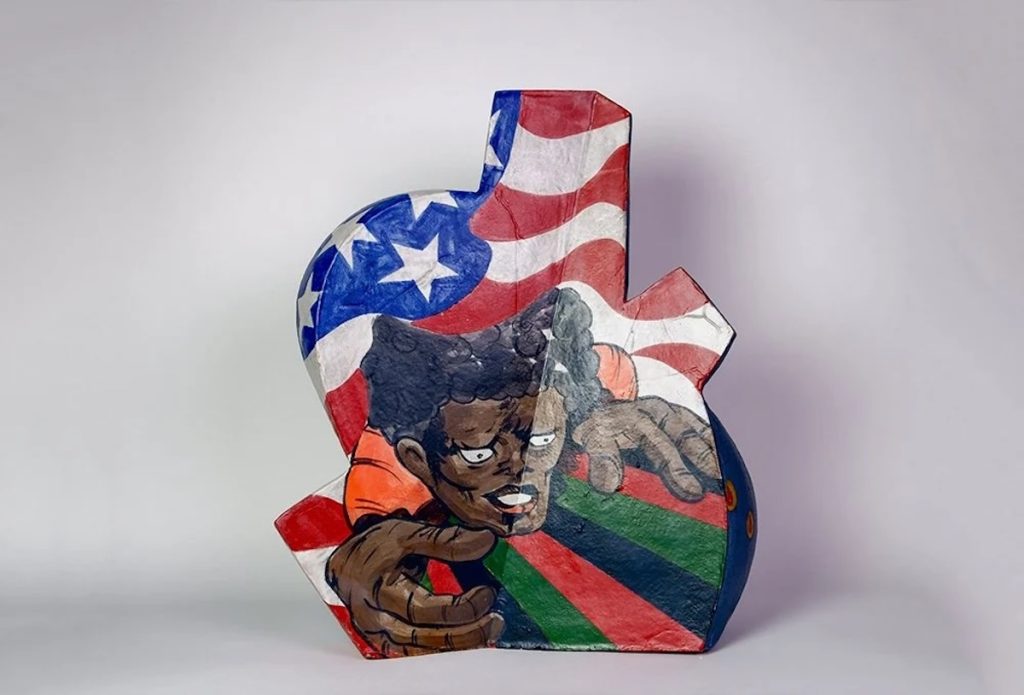
Signals Malcolm Mobutu Smith opens at Wexler Gallery with a proposition that most ceramic artists avoid: the vessel is not neutral. It is a body. It carries history. And depending on who made it and what they buried in the surface, it can confront you before you finish crossing the room. This solo exhibition — new works alongside key pieces from 2010 to 2026 — positions Smith as an artist for whom clay is not a medium of quiet craft but a site of cultural reckoning, on view through May 22.
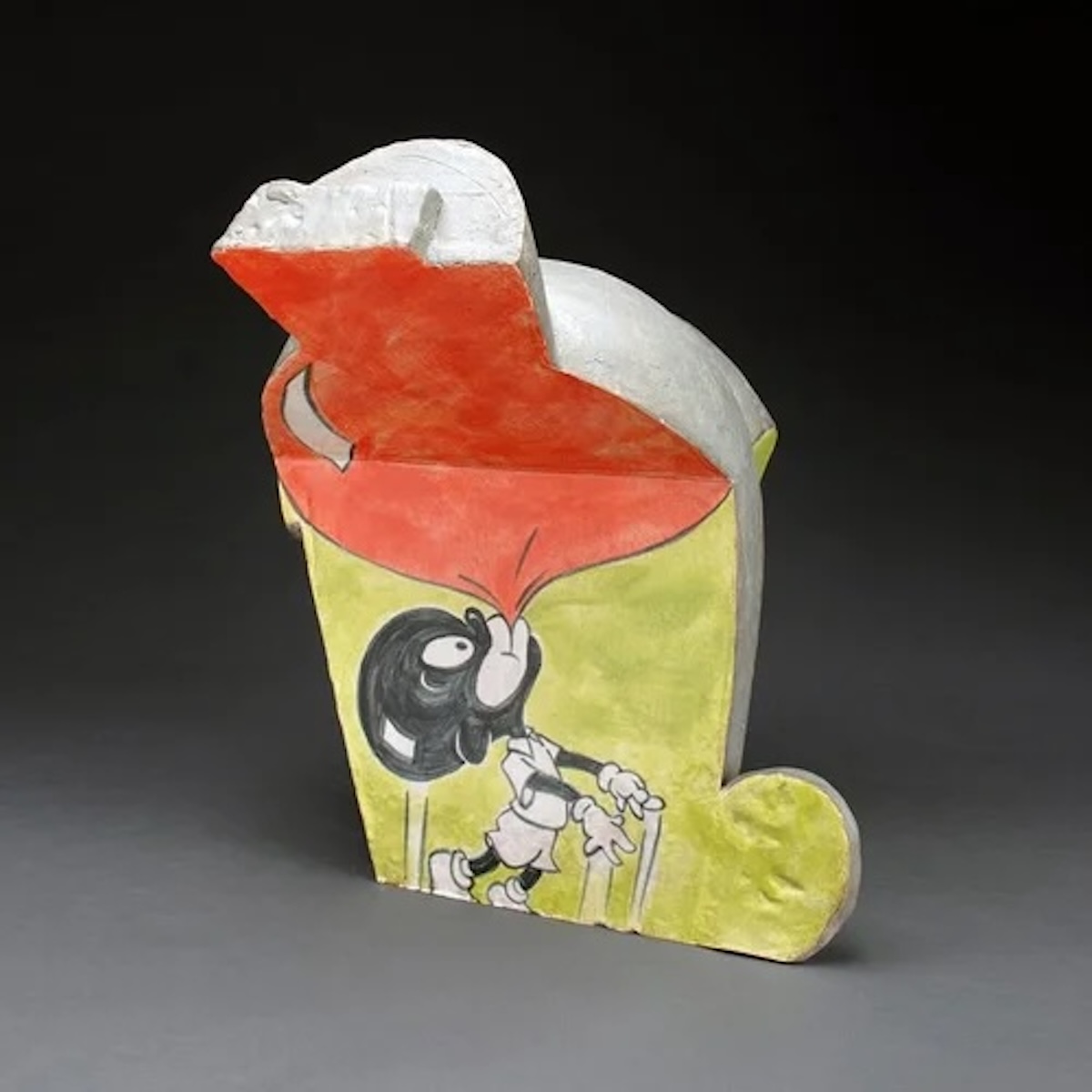
From Graffiti to Clay: How Signals Malcolm Mobutu Smith Builds Meaning
Smith started as a graffiti writer moving between Flint and Philadelphia — a practice built entirely on the assertion of presence in spaces that did not invite it. That impulse did not disappear when he picked up clay. It migrated. The cup, the bottle, the vase become territories to be claimed, marked, and loaded with content that exceeds their function. His wheel-thrown and hand-built forms draw on hip hop, jazz, comic books, and African sculptural traditions simultaneously, and the visual language he has developed over two decades balances sculptural mass against graphic surface — rounded volumes cracked open by sharp color, shifting planes, and angular interruptions that keep the eye from settling.
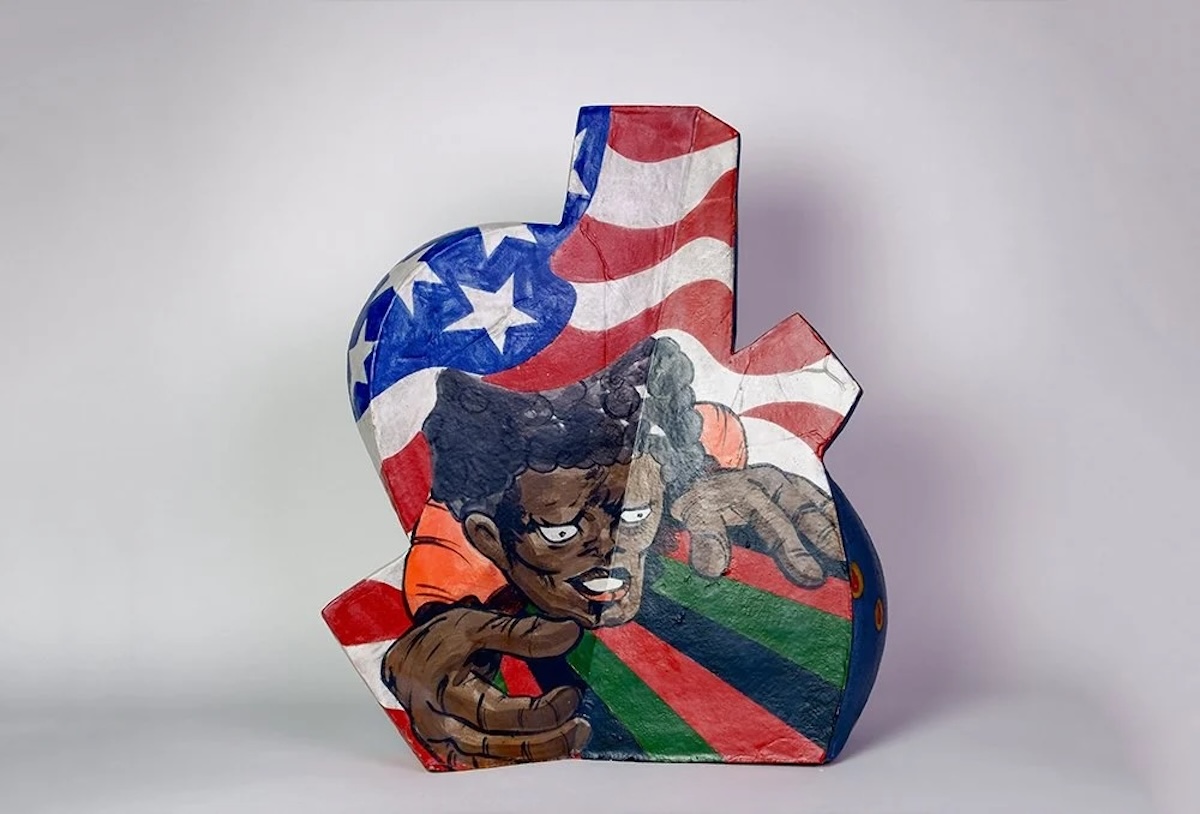
Embedded History in Signals Malcolm Mobutu Smith
The most charged works in the exhibition carry imagery you have to earn. Racial caricatures from American periodicals of the 1930s through 1950s are appropriated and embedded into the ceramic surface, visible only on close inspection. The strategy is deliberate — Smith forces the viewer through the seduction of the object before delivering the confrontation. In No More Words, figures of pride sit against offensive representations in a composition that refuses to let either cancel the other. The result is not didactic. It is tense, unresolved, and alive in a way that overtly political work rarely manages. Philadelphia’s gallery landscape continues to reward artists who refuse to separate craft from concept, and Smith’s practice operates at that intersection with uncommon discipline.

Spanning sixteen years of production, the exhibition reads as a seismograph of American life — the work from 2010 carries a different weight than the work from 2026, and the trajectory is not toward optimism. Alongside the socially charged pieces, Smith includes non-objective works that subvert pottery from the inside: blocked openings that deny function, exaggerated volumes that push past proportion, and surfaces so heavily ornamented that decoration itself becomes a form of aggression. These are not decorative objects pretending to be sculpture. They are sculpture that remembers being pottery and uses that memory as leverage. Signals Malcolm Mobutu Smith is on view at Wexler Gallery through May 22, 2026.
Images: Courtesy of Wexler Gallery
You may also like
-
“No Other Place to Go”—5 Artists Turn Climate Data Into Human Experience at InLiquid Gallery
-
Erik Spehn Strips the Ground Away in “Waves Become Wings”
-
Zoya Cherkassky’s American Cooking Turns a Vintage Cookbook Into a Study of Displacement
-
“Shimmer—Dreaming the Posthuman” Argues That Care, Not Extinction, Is the Point
-
“New Now IX” at InLiquid Gallery
1 thought on “Malcolm Mobutu Smith “Signals” at Wexler Gallery”
Comments are closed.