
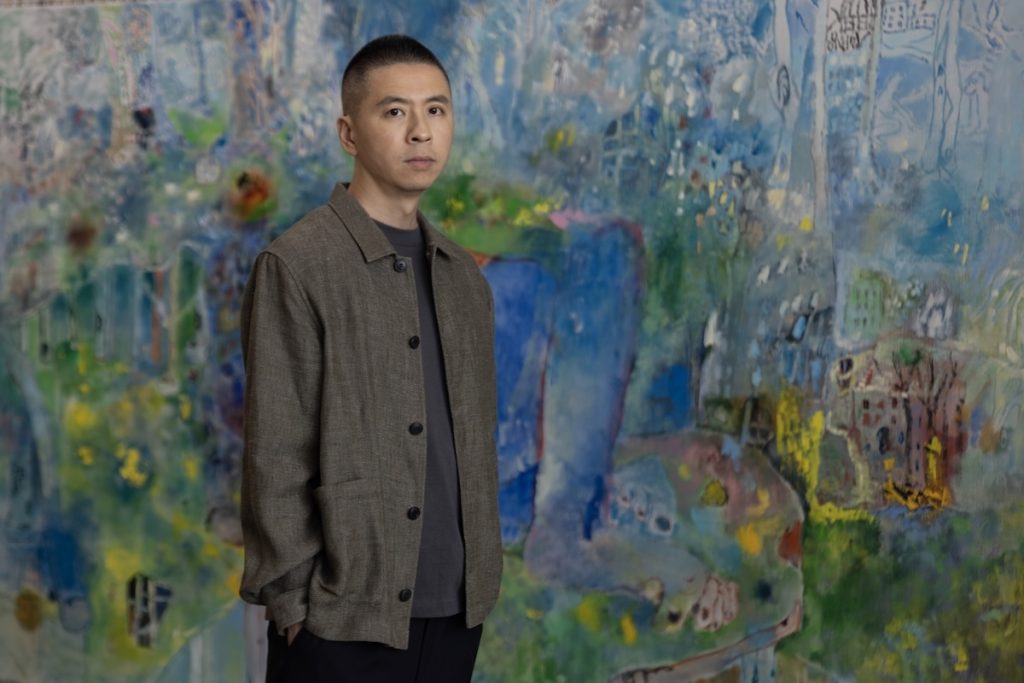
Qui Xiaofei and a debut built from found photographs
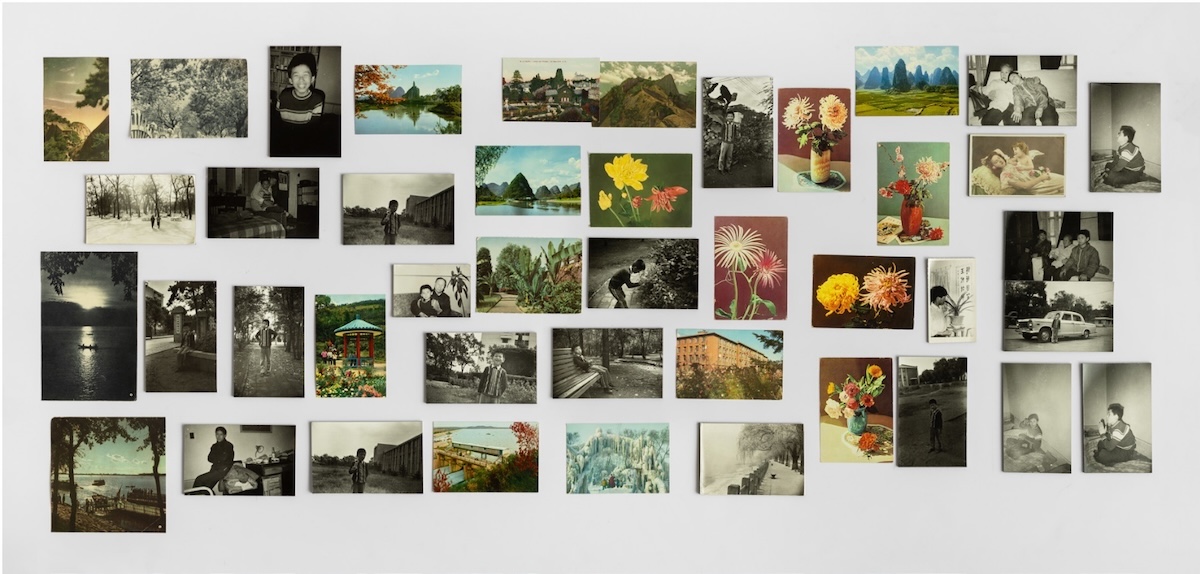
At Hauser & Wirth New York, “The Theater of Wither and Thrive”, February 12 through April 18, 2026, introduces a new body of work that is both intimate and expansive—like stepping into someone’s private archive and discovering it somehow maps the size of a whole lifetime. For his debut with the gallery, Qui Xiaofei presents new paintings and works on paper sparked by an unexpected discovery: a cache of previously unknown family photographs uncovered after the death of his father.
Those images—stories of love and loss preserved on heretofore undeveloped rolls of silver-halide film, now peeling and oxidized by time—become the psychological engine of the exhibition, setting the artist in motion toward bigger questions about how memory forms, slips, and returns in altered shape.
Qui Xiaofei doesn’t treat nostalgia as sentimentality. Instead, he frames memory as something subtler and less obedient—an elusive presence that evolves while the world keeps turning. The exhibition’s title captures that push and pull: wither and thrive as a cycle, not a conclusion. Within that cycle, the paintings and works on paper distill loss and wonder into compositions that suggest the vastness of life’s stage—presence and absence, prosperity and decline, grand histories and individual emotions all turning together in tidal human dramas.
Qui Xiaofei draws on Chinese cultural and philosophical traditions, while also acknowledging the influence of poets Robert Lowell and Emily Dickinson, creating a cross-current of references that feels less like quotation and more like atmosphere—an intellectual weather system hovering over the work.
Qui Xiaofei and the stagecraft of Harbin and Beijing
Born in Harbin in 1977 and now living and working in Beijing, Qiu Xiaofei came to prominence in the early 2000s as part of a new generation shaping China’s contemporary art scene. His practice has long been rooted in family memory and his complex attachment to Harbin, which reappears on canvas as composite spaces of abandoned architecture and natural landscapes—often like theatrical backdrops, built to hold emotion rather than simply depict place.
Over time, as he refined his formal language, his focus shifted toward the irrational forces within the human psyche: madness, hallucination, and other non-rational impulses that sit beneath everyday appearances. That psychological pressure is central here, too, as Qui Xiaofei continues negotiating binary oppositions—growth and death, brilliance and cruelty—through painting that moves between recognizable imagery and sudden shifts in perspective.
A key to reading the exhibition is his recurring motif of the spiral, a symbol of non-linear time where past, present, and future overlap and transform. In his own words: “All my paintings point to the same origin, forming an upward-moving spiral. Every new attempt to include experiences of greater complexity incorporates past solutions.” In the context of “The Theater of Wither and Thrive,” that spiral feels especially literal.
The found photographs do not simply “explain” the work; they trigger it—pulling memory forward into new forms, then sending it back through the painterly process, changed. The result is a practice that balances bodily perception with intellectual inquiry, enmeshing Eastern and Western cultural references into images that are formally free, vibrantly colored, and psychologically complex.
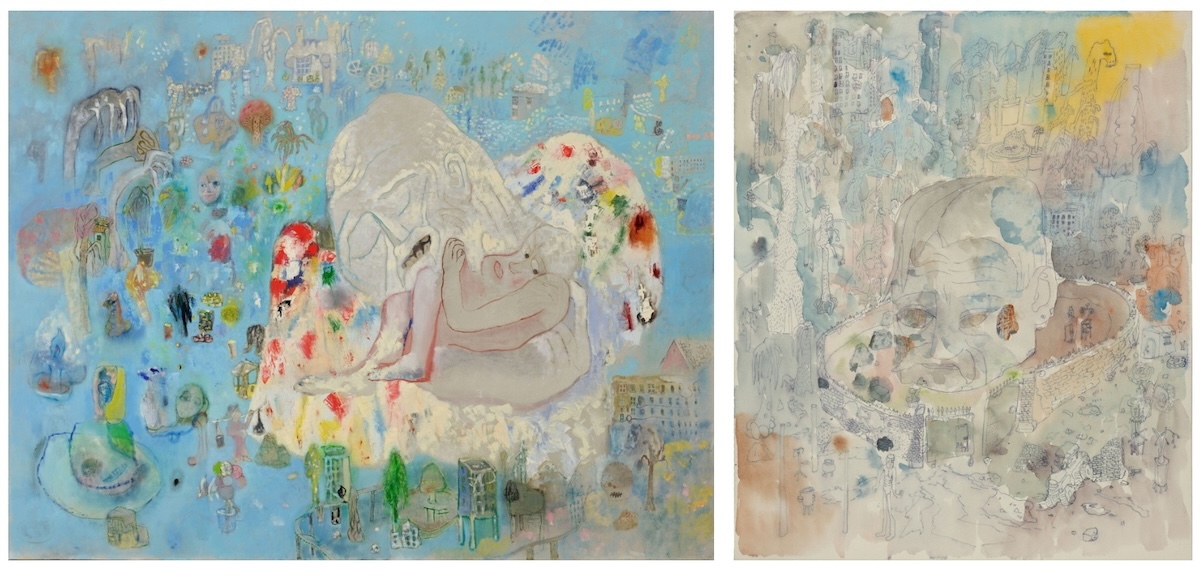
“Cosmopolitan” 2025 Ink on paper 45.5 x 38 cm / 17 7/8 x 15 in
Qui Xiaofei and “The Theater of Wither and Thrive” as four seasons of transformation
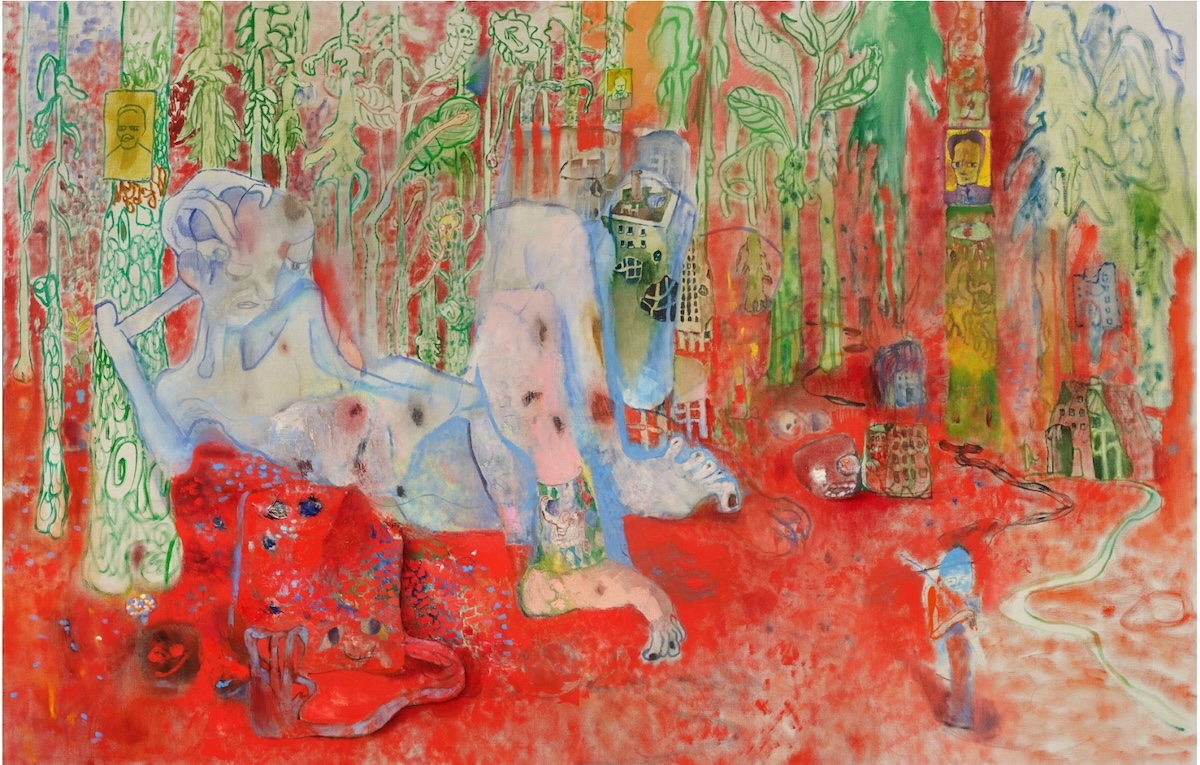
The exhibition’s title also nods to the artist’s familial connection to the stage. His grandparents were directors of the Yongfeng Society, a legendary Beijing theater troupe where his father worked as a painter and set designer. That lineage becomes more than biography; it becomes structure. Many works on view—especially the exhibition’s namesake painting of a dense red forest that greets visitors—use distorted ground and scale to evoke the flatness of theater backdrops familiar to his childhood. It’s a canny visual move: by pushing the space toward stage-set flatness, Qui Xiaofei makes the image feel performed by memory rather than observed from life.
Across the paintings and works on paper, natural and architectural elements from his hometown intertwine with visages of relatives and otherworldly humanoid monsters, assembling hallucinatory scenes that hover between recollection and dream. Flowers and fallen petals recur as reminders that ecological renewal is a consequence of death—loss giving rise to growth, so the exhibition never settles into a single emotional register. Instead, it keeps turning.
In four large-scale paintings along the gallery’s back wall, Qui Xiaofei explores that eternal terrestrial and emotional story through the passage of the four seasons, linking cyclical transformation in nature with the rhythms of human experience.
This debut also lands in the context of a strong international exhibition history. “The Theater of Wither and Thrive” presents as an artist doubling down on what painting can do when it stops trying to be a window and becomes a stage—where memory, psyche, and history can appear together, not as facts, but as living forces.
Discover more from artsXhibit
Subscribe to get the latest posts sent to your email.