
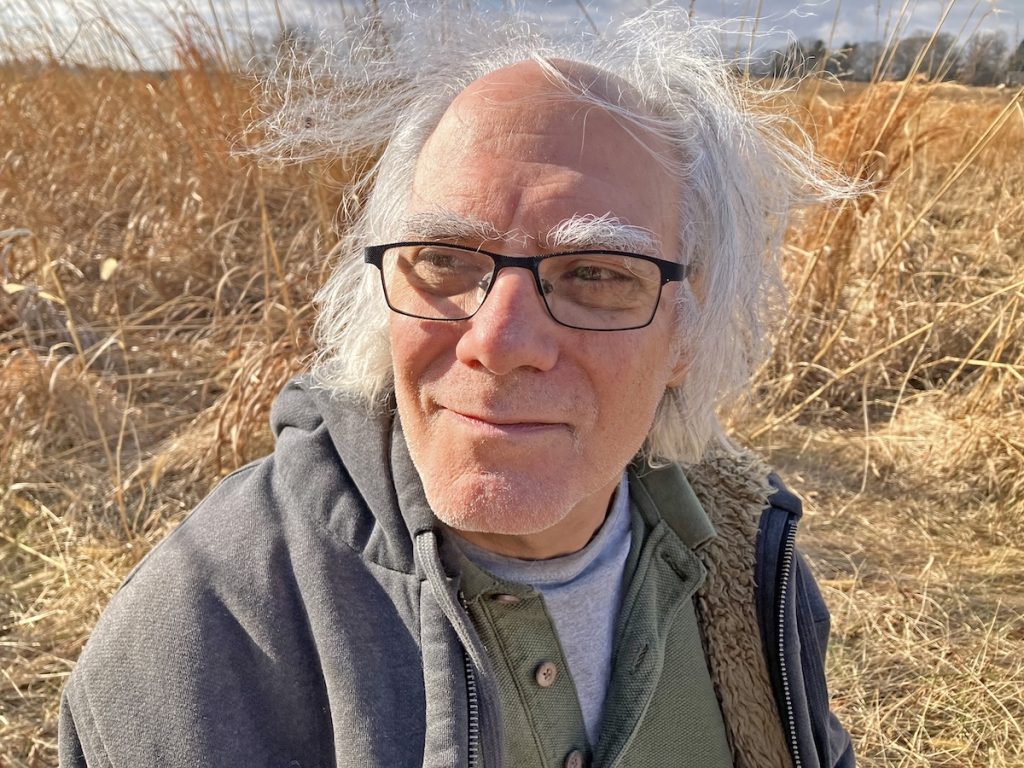

Of Crows, Meadows, and Memory
If you spend any time looking at the recent work of Richard Metz, you feel the city fall away. Not Philadelphia as a skyline, but Philadelphia as proximity—an edge where neighborhoods give way to meadows, where woods still hold their hush, and where crows cut through the air like punctuation. While Metz currently lives in Philadelphia, his practice carries that lived geography with an honesty: the land isn’t a backdrop, it’s a relationship—built through repetition, attention, and time.
That relationship is also how Richard Metz reaches the public right now, not only through exhibitions but through a format that feels intimate and deliberate. He’s just finished his second book of paintings and poetry, published by Frayed Edge Press, titled “Crow Meadow, Meadow Crows”. It follows his first book, “A Murder of Crows”, and it’s designed as a combined experience—poems adjacent to prints—where image and language arrive together. Metz’s publications are a way of placing artwork into the hands and homes of those without the gatekeeping that too often defines who gets access.
On the gallery front, Richard Metz maintains an ongoing presence with the Chestnut Hill–Borelli Gallery and also has work with the Little Gallery in Chestnut Hill. He’s had many shows across the Philadelphia area, and his next exhibition is slated for October at Highpoint Café in Philadelphia—a venue choice that fits his instinct for everyday entry points, where art can be encountered as part of a lived routine rather than a rarefied pilgrimage.
Richard Metz and the Medium as Meaning
To understand Richard Metz, you have to understand how restlessly he’s moved through materials over the last 25 years. He describes graduate school in 2000 as “disruptive and unsettling at times,” but also as the moment that “opened my work up to many possibilities and helped me understand my work in an art historical context.” This reveals the way his practice works: medium isn’t just technique; it’s a way of thinking through history, value, and the ethics of making.
His younger years consisted of graphite, ink, watercolors, and oil paint, but after graduate school, he expanded into drawings, paintings, prints, sculpture, costumes and masks, installations, and performance art. He pushed painting onto surfaces that bring their own cultural significance. One of his most striking conceptual turns was a series of oil paintings on bricks—objects that become sculptural while pointing directly at “the foundational process of brick making in our history.” Later, he created a large series of paintings on men’s suits and women’s dresses, explicitly “addressing gender stereotypes and myths,” and built installations from those groupings, letting the social symbolism of clothing carry its own narrative charge.
Then came a long run of woodcuts and linoleum cuts, driven by a practical and political question—affordability—followed by a shift that is both ancient and radically contemporary: egg tempera made with natural pigments, painted directly onto the trunk. These outdoor installations were transient and harmless, built around regional creatures, myths, legends, and imaginary beings, including a large ecological fairy-tale installation of 40 painted trees.
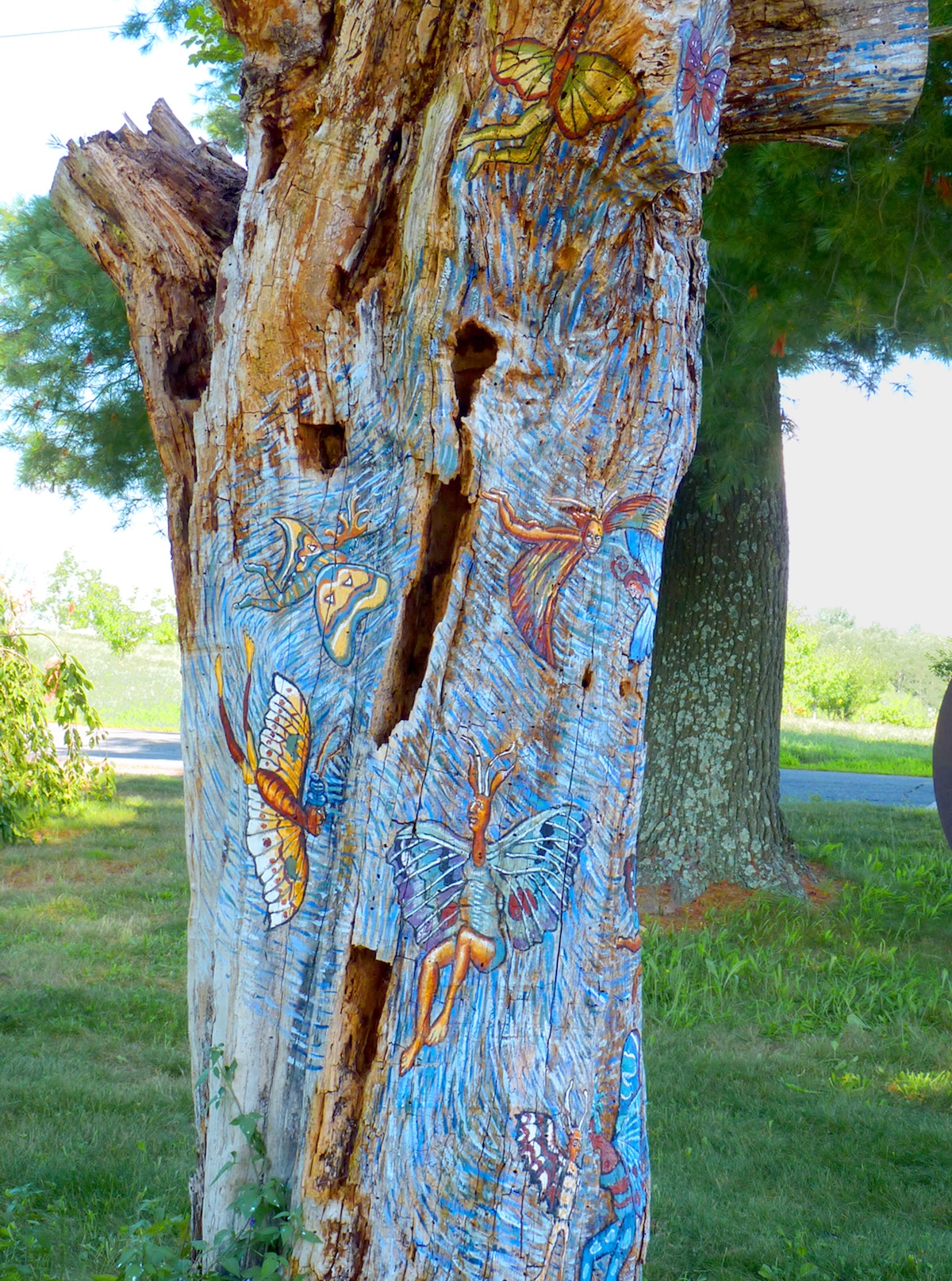
Metz is drawn to egg tempera because it reaches back “to painting recipes and techniques that are hundreds of years old,” but also because it resists ownership. As he explained, “capitalism warps contemporary art.” The work fades “away in three years,” refusing the culture of accumulation and the idea that art must become an object of permanent possession. He also frames hand-made paint as an ethical counterpoint to the “impersonal ‘high’ technology” he sees steering culture “into undesirable areas.”
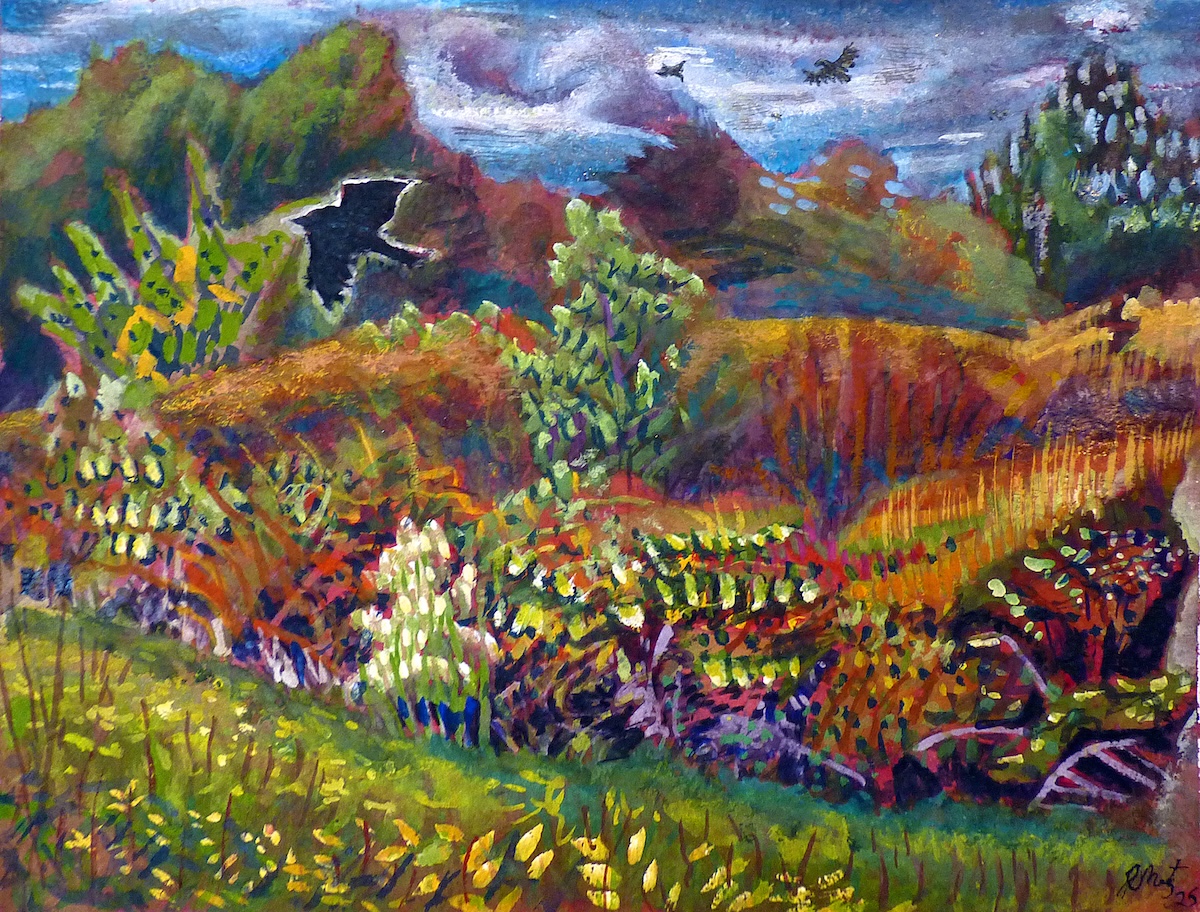
Today, Richard Metz is working in gouache and ink in fields and meadows, focusing on land and feeling, endeavoring to “make a deeper connection with it.” Gouache on watercolor paper allows him to work quickly and pivot as needed. He’s not abandoned other mediums, as that tactile relationship with material keeps his process grounded.
Richard Metz and the Meadow as Witness
In the last five years, Richard Metz has been inspired by nature—and, “to some degree, Crows.” His landscapes are not scenic postcards. They’re studies—ways to keep learning from a natural world he describes as “so threatened—more so every day.” He’s steeped in art history, with inspirations ranging from European cave paintings through the Renaissance to modernism, and work from Asia and Africa. He mentions a specific lineage in his landscape path—Van Gogh, Gauguin, and Cézanne—while his ink drawing sensibility reaches toward Japanese and Chinese masters, past and present.
His artist statement reads like a field note and a manifesto at once. He begins by describing how the work starts before the paint: “Before painting, I sit for a while, enjoying the breeze, the color, the movement, and sounds and smells of the meadow.” He returns to the same places repeatedly, building familiarity, working in series, recording the shifts as “spring becomes summer becomes autumn.”
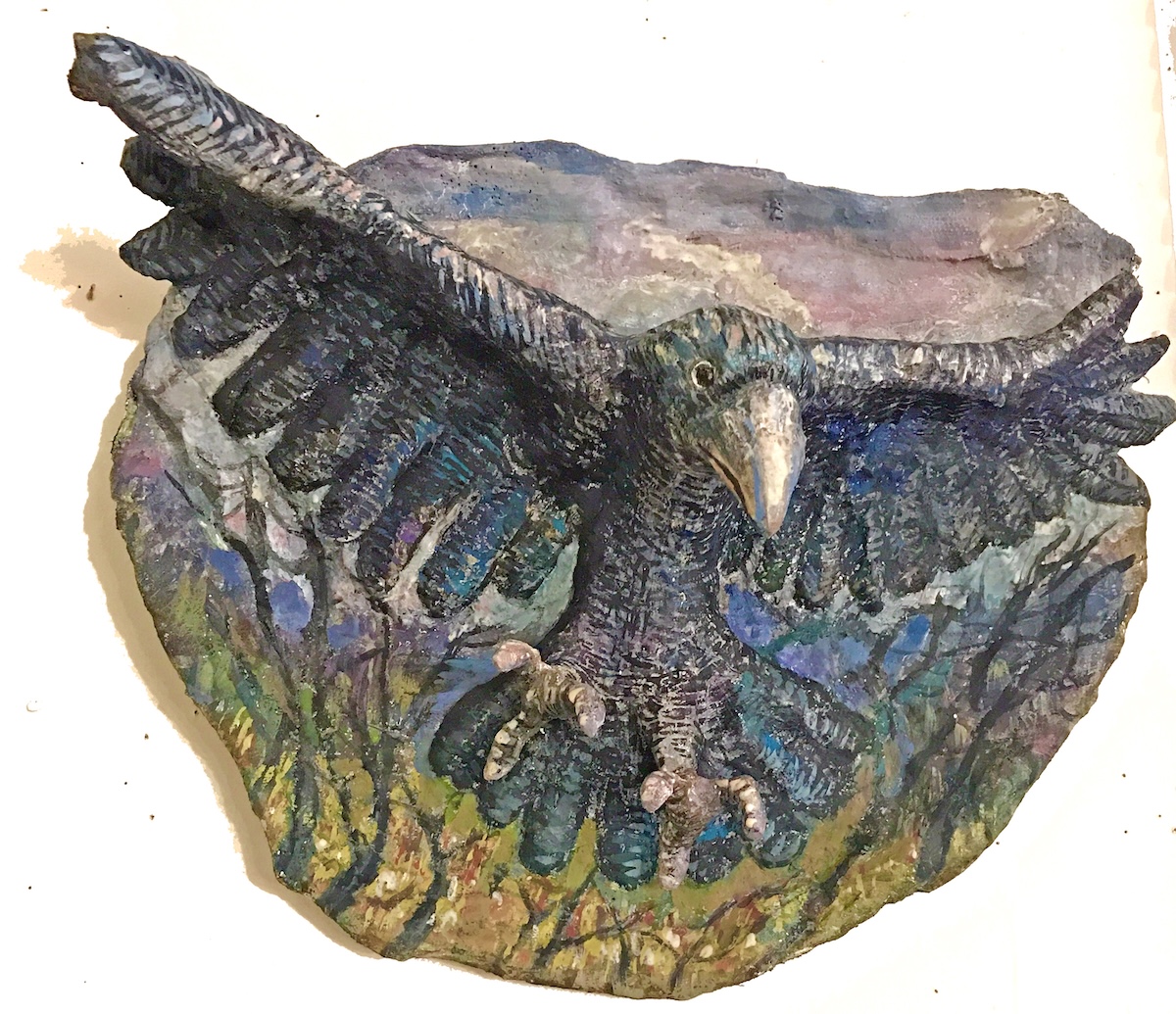
Painting, for him, is “part of my way of being, a practice,” and he describes a process of blending “my natural movements, with the lines, shapes and motion of the trees and meadows,” working outside for many hours and finishing in the studio.
And then the crows arrive—not as decoration, but as narrative agents. “I use crows as the active participants of the story,” Richard Metz writes. “They are omnipresent here and loud, with striking black forms set in the colored landscapes.” He recognizes their “deep mythological base,” their importance to “both indigenous and western cultures,” and their intelligence and social nature—traits that make them “beautiful and maligned subjects.” In his work, crows become both symbol and living presence—an edge between myth and ecology, between what we project onto animals and what they simply are.
One of the most important passages in his statement is also the most grounded. Richard Metz grew up in Southeastern Pennsylvania near where he’s making these works, and he writes, “I consider the land part of me, as I am part of it.” But he refuses to let that intimacy erase history. “This is not to negate the history of the lands,” he continues—land “stolen from the Lenape Indians,” worked as agriculture, used as Revolutionary War battle sites, folded into estates, and eventually preserved by public entities, keeping the landscape from becoming an abstract “nature” fantasy. It remains human, political, and contested.
He’s also blunt about what’s at stake. “Open green space, woodlands, and meadows are disappearing in our area,” he writes. “This is a terrible crime for current and future generations of humans and the many animals and birds that live in them.”
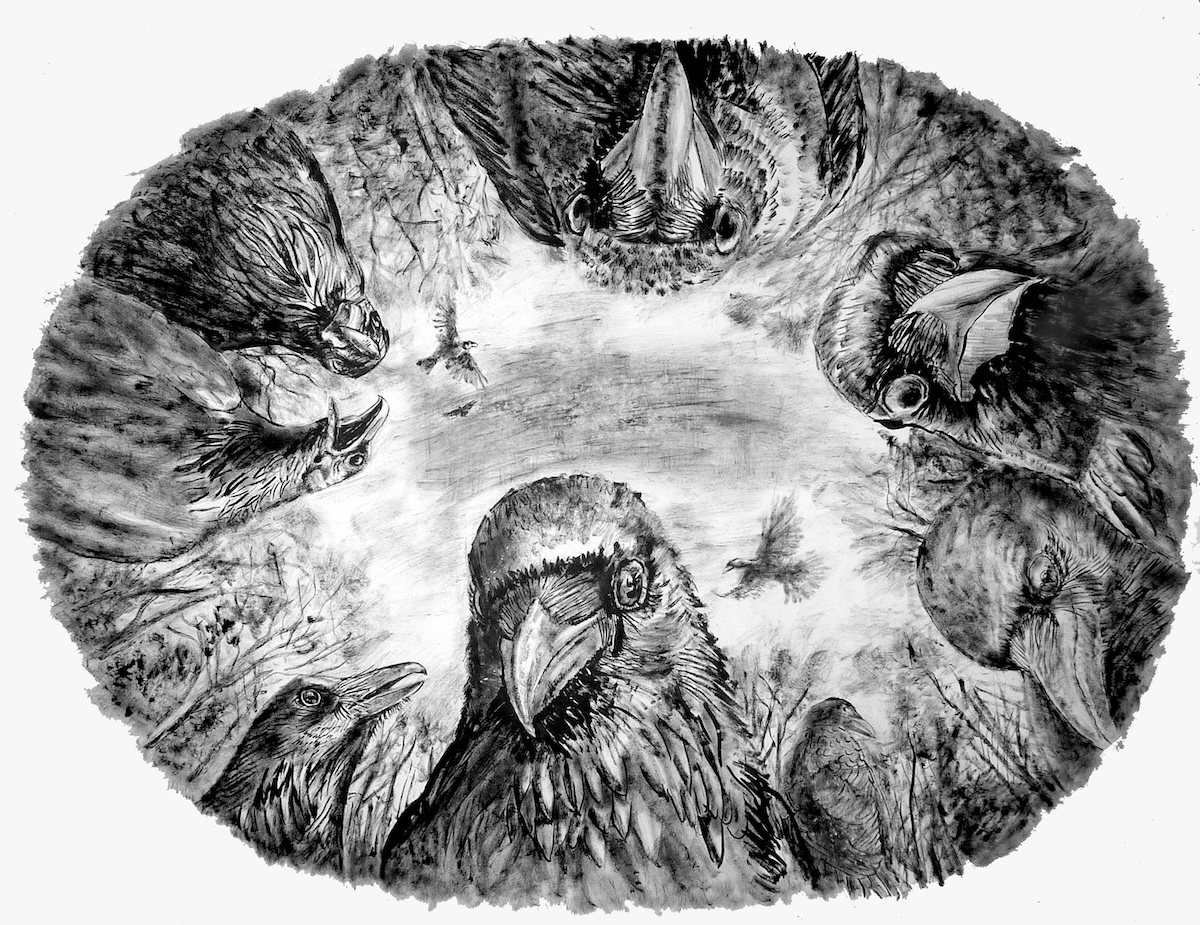
He links deforestation directly to warming, and then he frames his own life alongside the artwork: “As my way of thanking these areas for the wonder and joy I have experienced in them, I have worked for 35 years trying to preserve open spaces in Northwest Philadelphia and nearby areas.” The goal is direct and generous: to inspire viewers to spend more time in nature, and to take “a more active role in opposing development of these wonderful, crucial ecosystems.”
In an era when contemporary art often performs urgency as a style, Richard Metz offers something steadier: attention as an ethic, and craft as a form of advocacy. His work doesn’t just depict place—it argues for it, quietly but insistently, in pigment, paper, and the shadowed intelligence of crows.
Discover more from artsXhibit
Subscribe to get the latest posts sent to your email.