
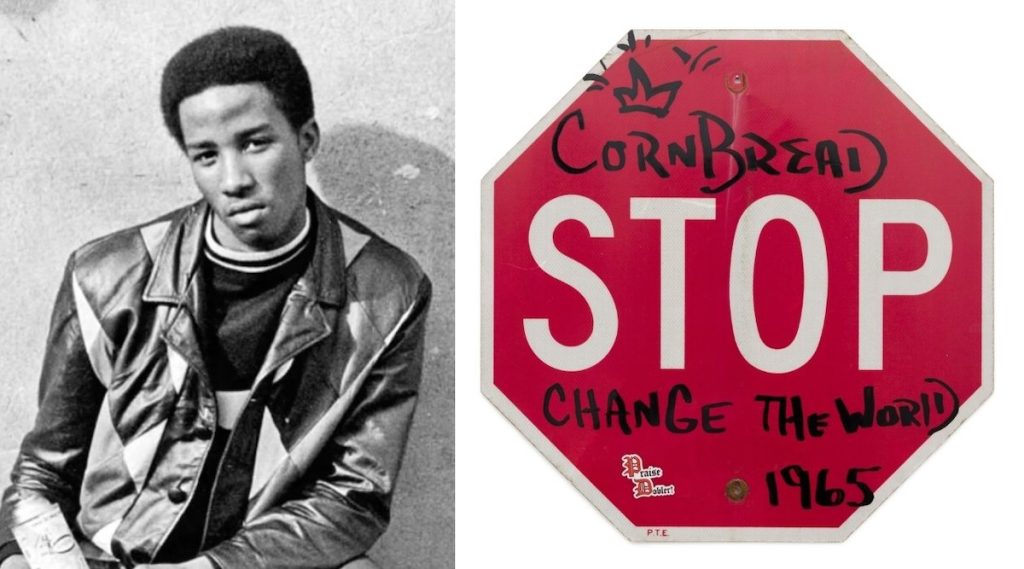
Cornbread: “Legendary”, on view at Paradigm Gallery + Studio from January 16 through February 15, 2026, is billed as Darryl “Cornbread” McCray’s largest solo exhibition to date in the city where his name first started echoing across walls, trains, and collective memory. After a multi-year international run that stretched from Amsterdam to Paris to Bogotá, Cornbread’s return lands with the kind of full-circle impact you can feel before you even step into the gallery.
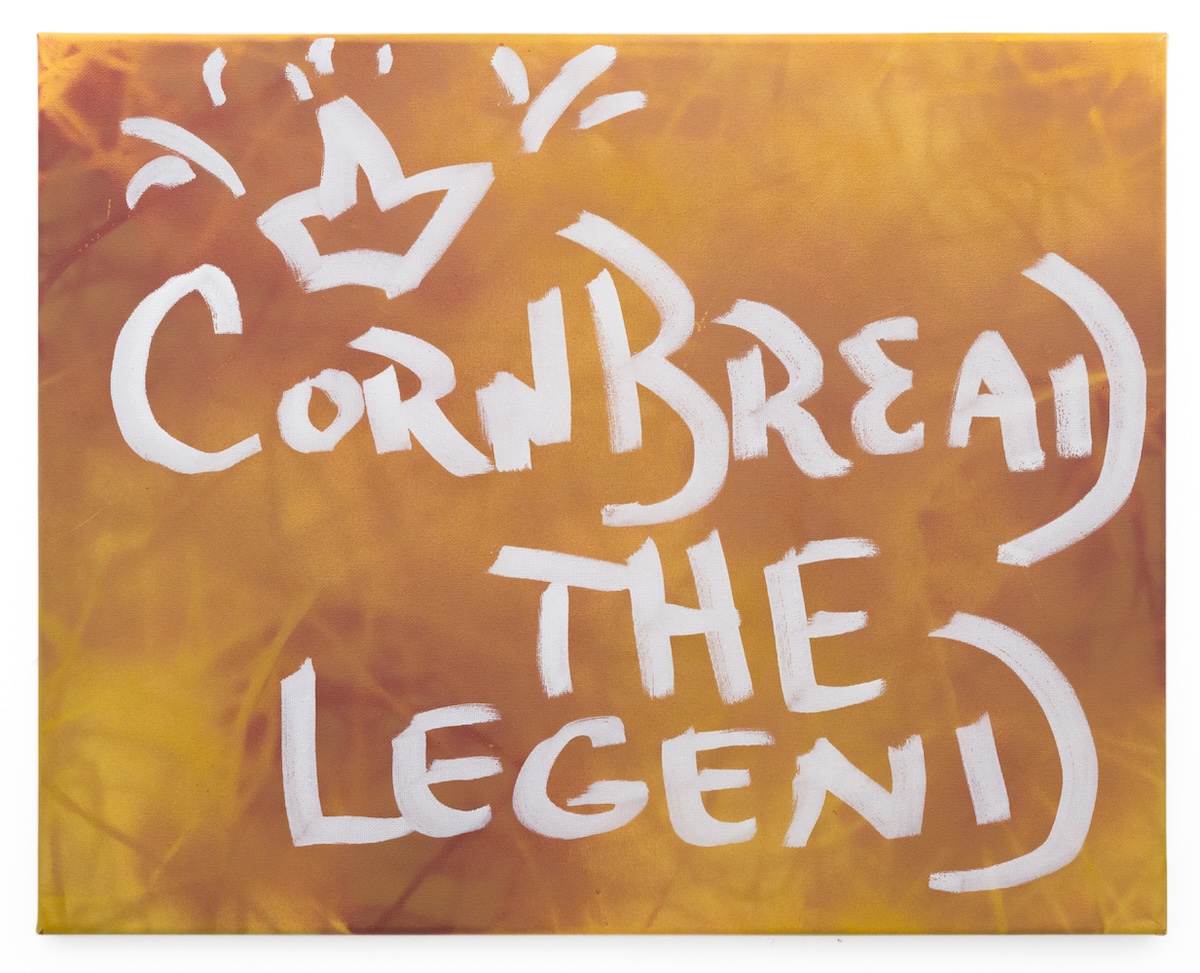
“Legendary” threads Cornbread’s present-day momentum directly back into Philadelphia’s cultural bloodstream. The exhibition pulls from his recent global successes, including works shown during his solo presentation at the STRAAT Museum in Amsterdam, material connected to a newly published book from the Paris leg of the tour titled “Cornbread the Legend,” and even a movie set piece he created during his cameo in Audrey’s Children, the Tribeca Film Festival’s winner of the Tribeca X Award for Best Feature (2024). The result is an exhibition that reads like a map of where graffiti has traveled—and how Cornbread remains one of its most essential origin points.
Adding to the moment: this show also celebrates the accession of Cornbread’s work into The Hip Hop Museum’s collection, timed for the museum’s grand opening in the Bronx in Fall 2026. That institutional recognition matters because it frames the artist not simply as a local hero or a street-art folk figure, but as a foundational artist whose influence touches the larger architecture of Hip Hop culture itself, where graffiti stands as the first of its elements, and where Philadelphia’s claim to the origin story becomes harder and harder to ignore.

Cornbread: The Origin Story That Still Shapes the Culture
The mythos around Cornbread is famous, but “Legendary” succeeds because it doesn’t treat the story as a frozen legend—it treats it as a career still unfolding. Born in 1953, Darryl McCray adopted the nickname Cornbread during a stint in juvenile corrections, earning it from a chef who refused to make the food he kept requesting. That detail—part absurd, part deeply human—has always felt like the perfect origin note for a figure who would later transform a nickname into a citywide presence.
Cornbread’s early “campaign,” “Cornbread Loves Cynthia,” remains a defining chapter: a bold declaration of love for a classmate at Philadelphia’s Strawberry Mansion Junior High School, written everywhere along their walking route home. The gesture wasn’t about intimidation or territory; it was about identity, expression, and visibility—an early signal that this tagging style was non-gang-related and emotionally driven. The ripple effects are profound: that same love-letter impulse later inspired ESPO’s world-famous Love Letters mural series along the Philadelphia Market–Frankford transit line.
And then there are the stunts—the kind of cinematic, headline-friendly feats that turned Cornbread into a story the world couldn’t stop repeating. He’s known for tagging a touring jet belonging to the Jackson 5, and for sneaking into the Philadelphia Zoo to tag an elephant—an act later “borrowed” by Banksy. But “Legendary” deepens the zoo story by preserving Cornbread’s own words, which reveal the emotional logic beneath the spectacle.
In a 2020 interview, Cornbread explained, “I was on the bus one day, reading the newspaper, and it said ‘Cornbread is shot to death,’” he said. “I knew I had to do something amazingly bizarre to let people know I wasn’t dead. So I go to the zoo. It’s a big tourist attraction. I watch the zookeeper shower the elephant with a hose, watch him tug on his flappy ears, and pat his side. The elephant is tame. I saw the zookeeper was not in danger.”
He continued, “After three days of watching this, I go to the zoo early in the morning, climb over the fence, into elephant’s enclosure. I take the top off the spray paint, start shaking. The balls start rattling. He turns around, he looks at me, doesn’t pay attention. I paint ‘Cornbread lives’ right on his side.”
That quote is the soul of Cornbread’s legend: not recklessness for its own sake, but performance as proof-of-life—a radical announcement of presence. It’s also a reminder that Cornbread has always understood media, audience, and mythology as materials. Long before “brand building” became a creative industry cliché, Cornbread was writing himself into public consciousness with an instinct for narrative that artists still chase today.
Cornbread: A 100-Work Archive Built from the Street Up
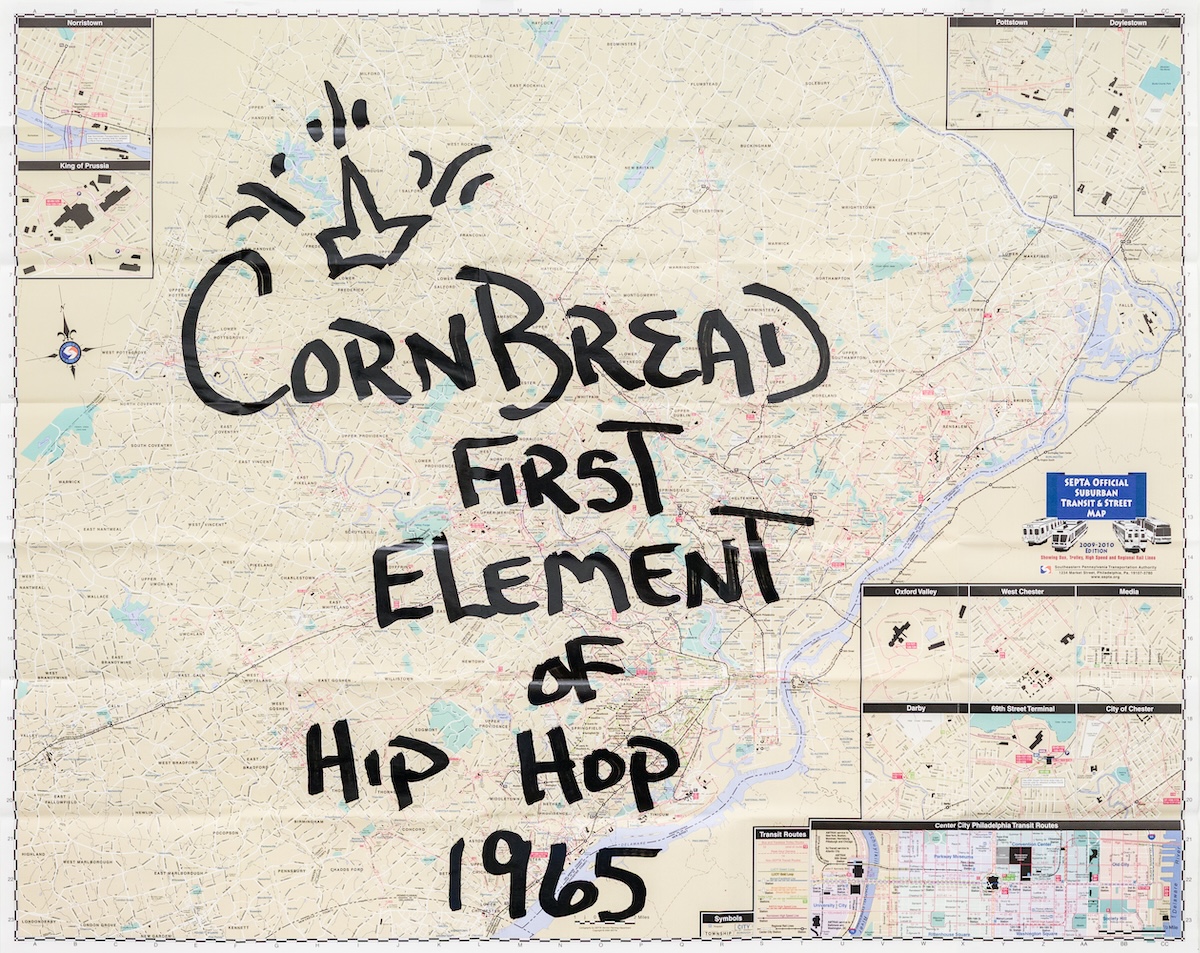
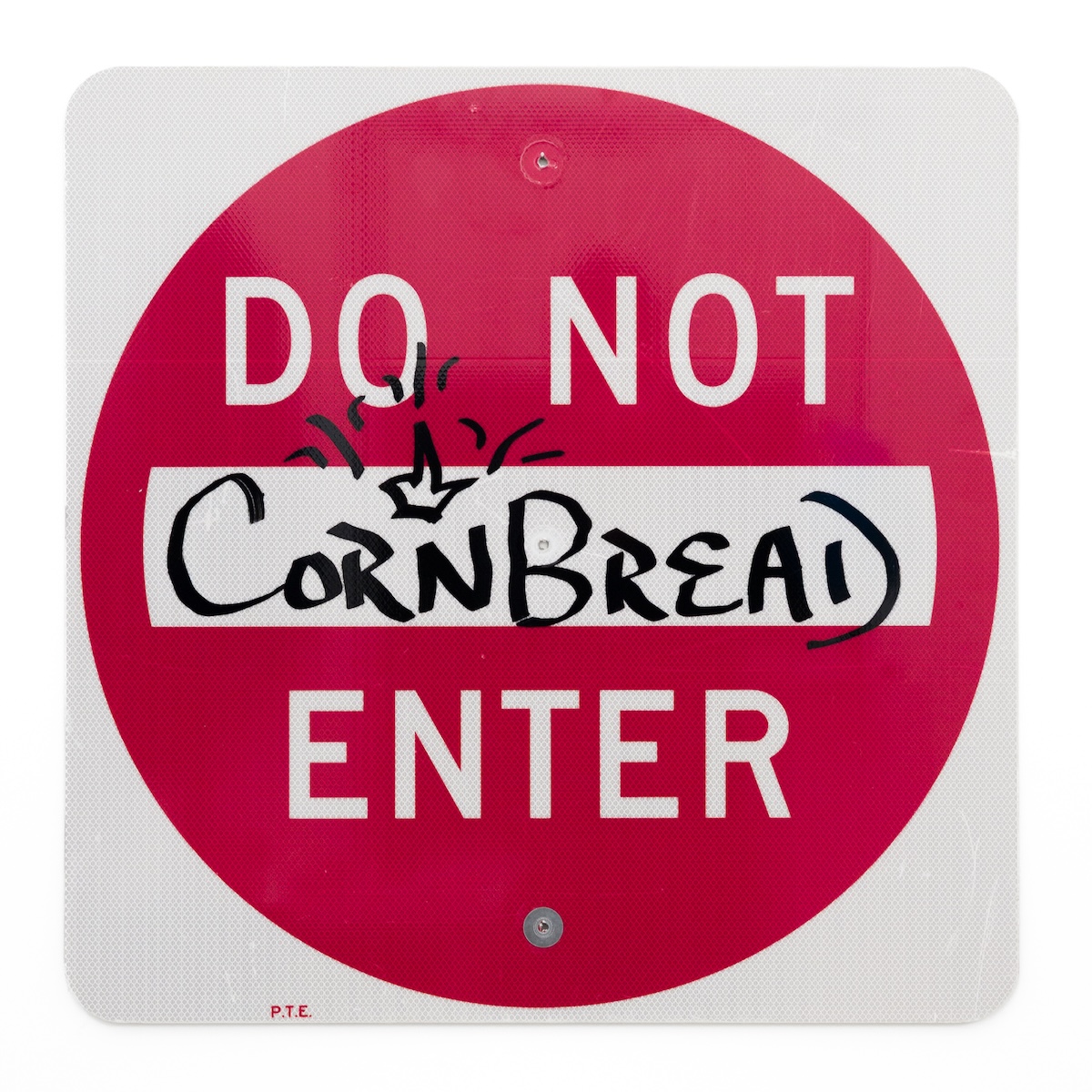
“Legendary” unfolds across the first and second floors of Paradigm Gallery + Studio with an ambitious scale: over 100 works spanning decommissioned street signs, postcards, subway maps, mailing stickers, original canvases, and more. The material choices are a philosophy. These are objects built for movement, exchange, and public life. A subway map isn’t neutral; it’s a record of routes, neighborhoods, and the daily choreography of a city. A street sign is both an instruction and a boundary. A mailing sticker is a tiny courier of identity. By making art on these substrates, Cornbread collapses the distance between the street and the gallery without losing the grit, humor, and immediacy that made his name resonate in the first place.
The show’s title, “Legendary”, is earned because the exhibition is calibrated to emphasize impact, not just biography. Cornbread’s work is positioned as the foundation for Philadelphia’s street art scene, but also as a cornerstone in the longer history of Hip Hop, where the visual element of graffiti becomes a language of self-definition and cultural authorship. The exhibition leans into the cinematic stories surrounding Cornbread’s career, elevating him as a living monument who continues to influence artists, writers, breakers, and musicians today. That “continuing” matters: this is not a retrospective that politely seals the past; it’s a demonstration of how a foundational voice can evolve while still sounding unmistakably itself.
An exhibition preview event is scheduled for Friday, January 16, 2026, with a note that a ticketed RSVP is required. A public First Friday opening reception follows on Friday, February 6, 2026, from 6:00 pm to 8:00 pm.
You may also like
-
“No Other Place to Go”—5 Artists Turn Climate Data Into Human Experience at InLiquid Gallery
-
Erik Spehn Strips the Ground Away in “Waves Become Wings”
-
Zoya Cherkassky’s American Cooking Turns a Vintage Cookbook Into a Study of Displacement
-
“Shimmer—Dreaming the Posthuman” Argues That Care, Not Extinction, Is the Point
-
“New Now IX” at InLiquid Gallery