
Krasner and Pollock Reconsidered at The Met
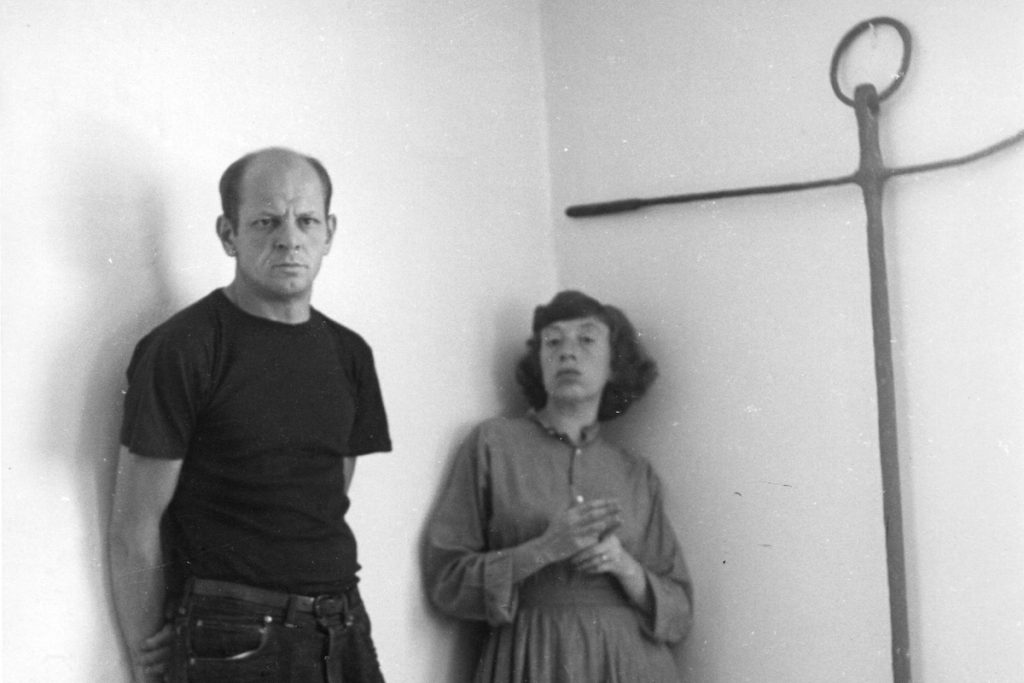
With “Krasner and Pollock: Past Continuous”, The Metropolitan Museum of Art is doing far more than mounting a high-profile survey of two towering figures in postwar American art. It is staging a long-overdue recalibration. On view from October 4, 2026, through January 31, 2027, the exhibition brings together more than 120 works from over 80 U.S. and international lenders, making it the first major New York presentation devoted to either Lee Krasner or Jackson Pollock in more than two decades, and the first major exhibition of either artist at The Met. That alone makes this a landmark. But the deeper achievement of “Krasner and Pollock” lies in how the exhibition reframes the pair not as a familiar art-world myth, but as two distinct, forceful, and deeply consequential artists whose lives and practices unfolded in parallel.
The subtitle, “Past Continuous”, drawn from a 1976 painting by Krasner, signals the intellectual ambition of the project. Rather than freeze these artists in the mythology of Abstract Expressionism, the exhibition traces motion, development, recurrence, and memory. It follows Lee Krasner and Jackson Pollock across the full arcs of their careers, foregrounding not only their personal and artistic bond, but also the divergences that made each of them singular. This is especially significant in the case of Krasner, whose achievement has too often been discussed in relation to Pollock rather than on its own radical terms. Here, “Krasner and Pollock” begins with a fundamental premise of equality, and that premise changes everything.
Max Hollein, Marina Kellen French Director and Chief Executive Officer of The Metropolitan Museum of Art, captures the exhibition’s broader institutional and scholarly importance when he says, “With its distinctive premise and scope, ‘Krasner and Pollock: Past Continuous’ exemplifies The Met’s commitment to reexamining modern art through rigorous scholarship and fresh perspectives.” He continues by emphasizing that the exhibition situates both artists within a larger cultural and artistic framework, affirming them as defining figures whose work still shapes future generations. That statement feels especially resonant here, because this exhibition is not merely retrospective. It is corrective, expansive, and alive to the ongoing stakes of modern art history.
Krasner and Pollock and the Power of Parallel Lives
The backstory behind “Krasner and Pollock” is one of proximity, collision, and enduring transformation. The two artists met in New York in 1942 when both were included in an exhibition organized by John Graham. They married in 1945 and moved to Springs, Long Island, where their personal and professional lives remained intertwined until Pollock died in 1956. Yet the exhibition refuses the easy shorthand of romantic myth. Instead, it insists on complexity. Pollock’s legacy was secured during his lifetime and amplified after his death, while Krasner’s nearly three decades of surviving him became some of the most experimental and transformative years of her career.
That difference in historical reception is central to the exhibition’s urgency. Pollock’s fame, fueled in part by LIFE magazine’s famous 1949 question asking whether he was “the greatest living painter in the United States,” often overshadowed Krasner’s contributions. His early death and the media narrative that followed only intensified that imbalance. “Krasner and Pollock” addresses this history directly, not by diminishing Pollock, but by elevating Krasner into the full clarity of her importance. The result is a richer, more accurate view of both artists and of the art historical moment they helped define.
What makes this exhibition especially compelling is its attention to the artists’ separate foundations. Krasner’s formation was shaped by her engagement with the European avant-garde, especially Pablo Picasso, Henri Matisse, and Piet Mondrian, and by her important training under Hans Hofmann. Pollock, by contrast, absorbed a broad network of influences that included Thomas Hart Benton, American Regionalism, Mexican muralism, Surrealism, and even his own family of artists. Their routes into abstraction were not identical; they were complementary divergences that eventually converged in the rupture of Abstract Expressionism. That framing gives “Krasner and Pollock” its real dramatic charge. The exhibition is not content to show two artists side by side. It reveals how shared terrain can still produce radically different artistic languages.
David Breslin, Leonard A. Lauder Curator in Charge of The Met’s Department of Modern and Contemporary Art, puts it beautifully: “Krasner and Pollock: Past Continuous begins with the fundamental premise that these artists are equals, partners in life, giants in the history of art, and revolutionaries who defined what abstraction could be.” That sentence lands with the force of a thesis statement and, in many ways, a necessary correction. Brinda Kumar, Associate Curator in the same department, sharpens the point further when she notes that the exhibition approaches them “not as a single story, but as two practices unfolding in proximity over time.” That distinction is the key to why this show matters.
Krasner and Pollock Through the Works That Define an Era
Organized into 12 chapters spanning the 1930s through the postwar decades and into the final stages of each artist’s life, “Krasner and Pollock” moves through moments of convergence and separation with unusual care. Some galleries place the artists in direct conversation, while others grant them independent space. That structure feels especially smart because it avoids flattening either practice into mere comparison. Instead, it allows viewers to experience exchange and independence in turn.
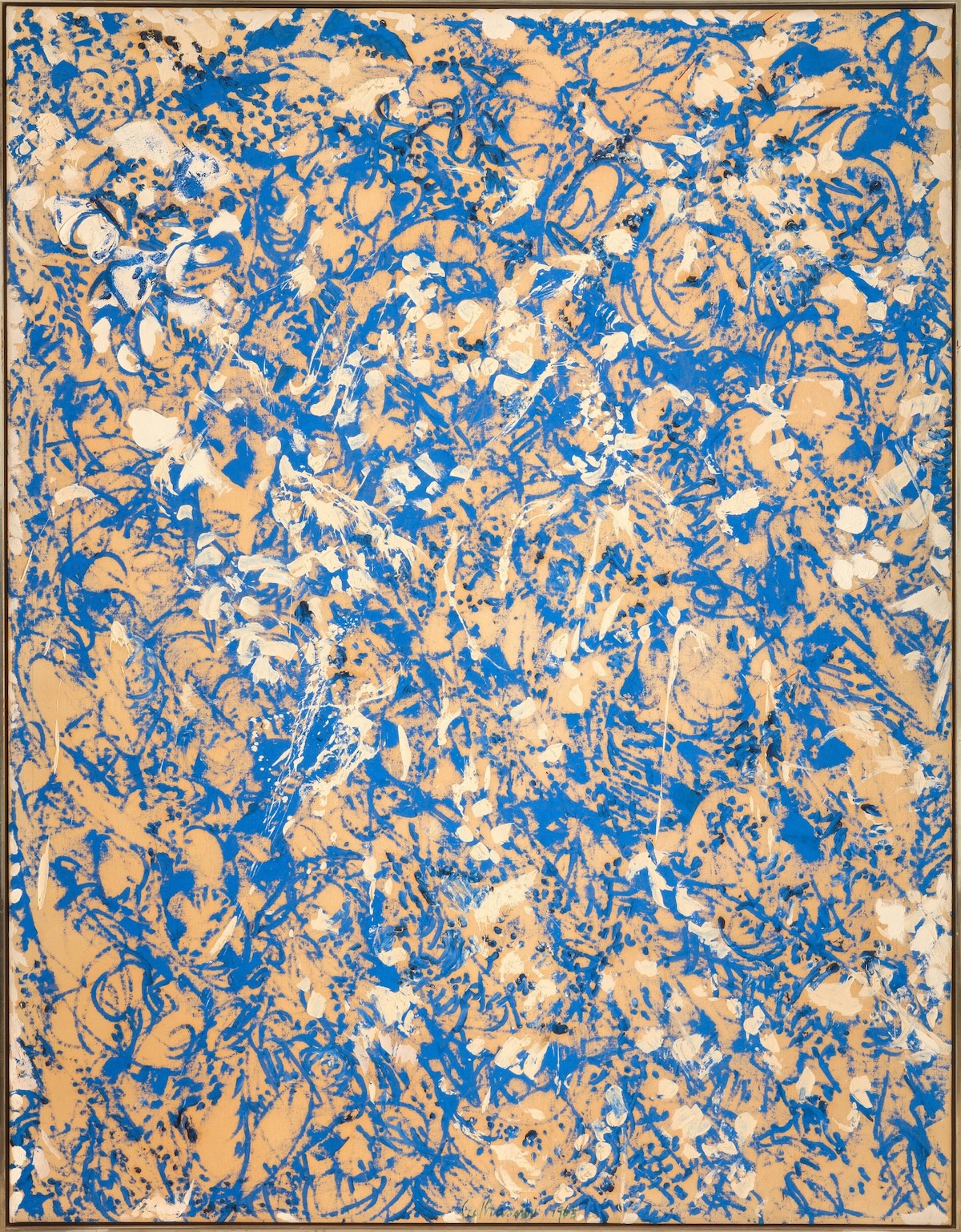
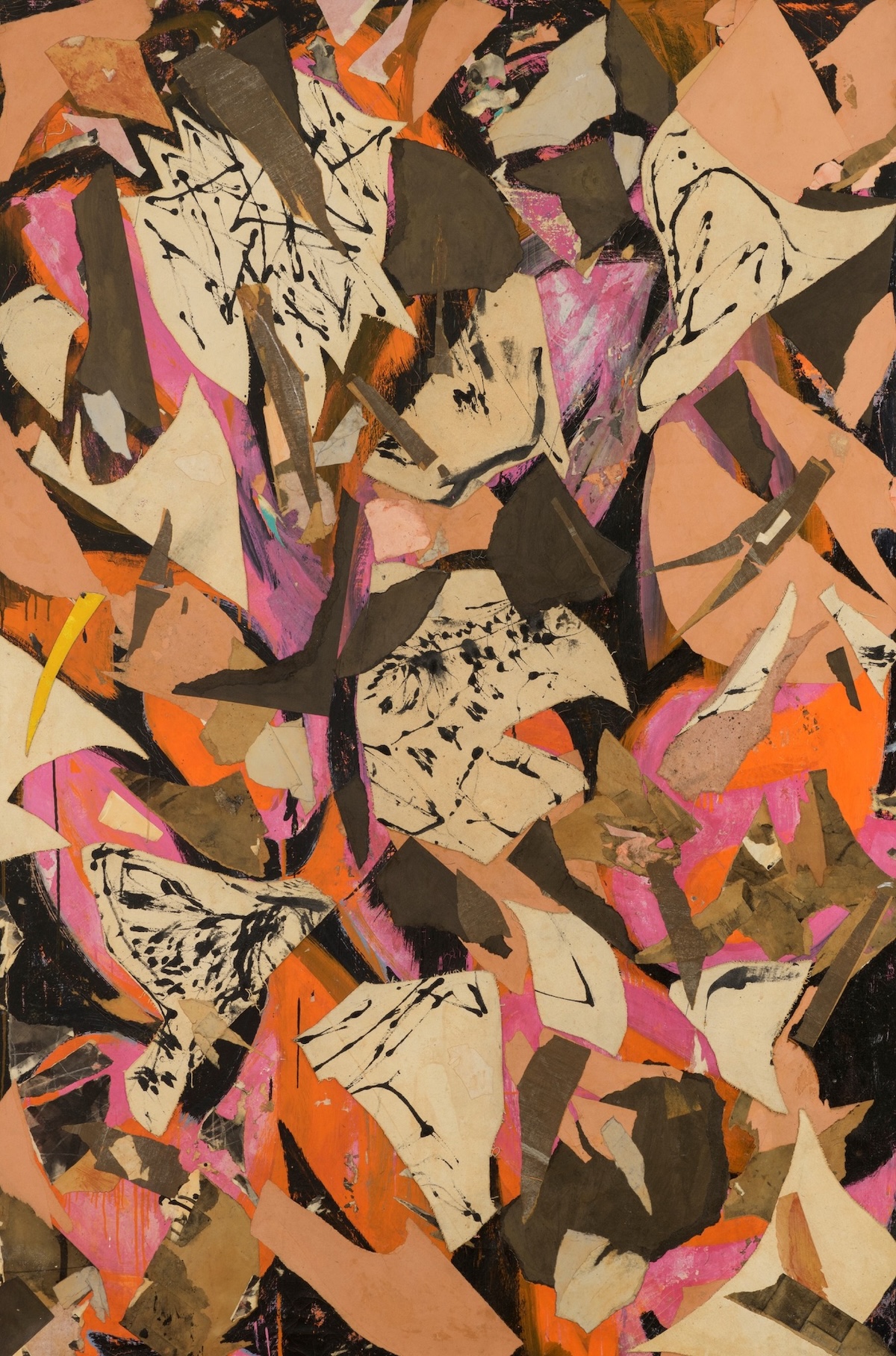
The artworks featured are formidable. For Krasner, the exhibition includes landmarks such as Composition (1949), The Seasons (1957), The Eye is the First Circle (1960), and Combat (1965). These are not supporting works in someone else’s story; they are commanding statements of formal ambition, emotional intelligence, and painterly invention. The exhibition also highlights crucial bodies of work such as the Little Images series, her bold collages, gestural canvases, and later hard-edge paintings, alive with color and structural confidence. Krasner emerges here as an artist of ceaseless reinvention, one whose abiding interest in nature, color, and abstraction gave her work both discipline and volatility.
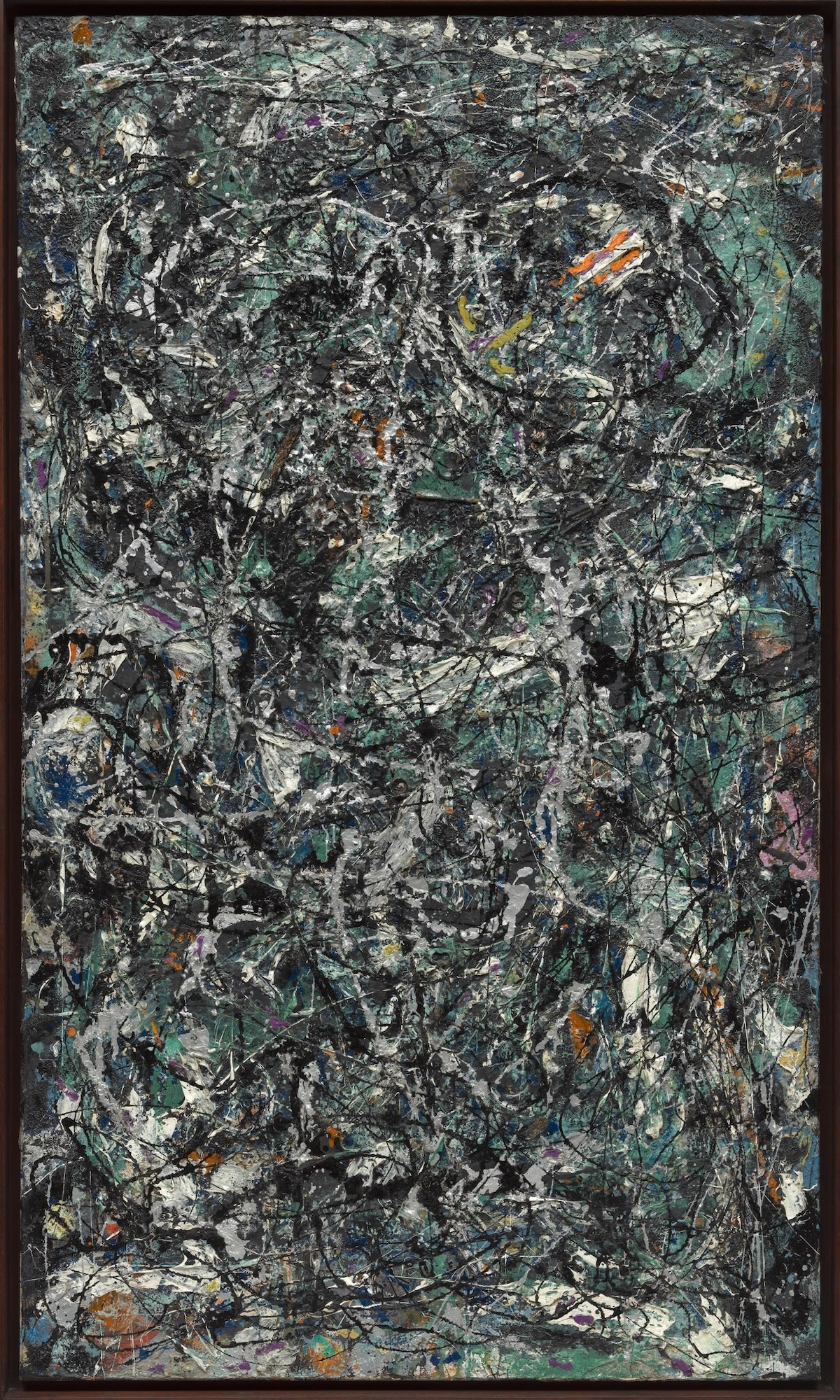
Pollock’s side of the exhibition is equally rich, moving from Stenographic Figure (1942) and Guardians of the Secret (1943) through the revolutionary drip paintings and into later monumental canvases, including Number 1, 1950 (Lavender Mist) and The Deep (1953). His breakthrough “drip” technique, which flourished in an intensely concentrated period from 1946 to 1951, remains one of the defining innovations of 20th-century painting. But “Krasner and Pollock” does not stop with the canonical image of Pollock as an action painter. It also follows his return to earlier motifs in the mid-1950s, revealing a practice that was richer and more complex than the myth has often allowed.
What gives the exhibition unusual depth is the way it situates these masterpieces within a larger field of dialogue. The design, informed in part by historic spaces and installations, enhances the sense of exchange across time and across practices. It also underscores how both artists were negotiating not only with each other, but with the political, cultural, and aesthetic pressures of their era. Rarely loaned works from major institutions including the Peggy Guggenheim Collection, MoMA, the Whitney Museum of American Art, Tate, the National Gallery of Art, the National Gallery of Victoria, Centre Pompidou, Buffalo AKG Art Museum, the Dallas Museum of Art, The Art Institute of Chicago, and SFMOMA deepen that conversation, as do rarely seen works from important private collections.
There is also something powerful about this exhibition taking place at The Met. The museum has long held a meaningful place in both artists’ histories. Pollock first exhibited there in 1943, later became one of the Irascibles challenging its stance on contemporary art, and eventually entered its collection through the landmark Autumn Rhythm (Number 30). Krasner’s relationship with the museum was no less significant, from gifts she made during her lifetime to the fact that her memorial service was held there in 1984. In that light, “Krasner and Pollock” is an institutional reckoning.
For knowledgeable viewers, the significance of this show extends beyond biography and beyond masterpiece-hunting. It models a curatorial approach that reexamines canonical narratives and links 20th-century innovation to the concerns of contemporary artists and audiences. In advance of the Tang Wing for Modern and Contemporary Art, opening in 2030, this exhibition signals a larger ambition at The Met: to tell modern art history with greater precision, broader context, and a sharper sense of who has been overlooked. On that level, “Krasner and Pollock” is not simply a major museum event. It is one of the most important art historical statements New York is poised to make in 2026.
You may also like
-
“No Other Place to Go”—5 Artists Turn Climate Data Into Human Experience at InLiquid Gallery
-
Erik Spehn Strips the Ground Away in “Waves Become Wings”
-
Zoya Cherkassky’s American Cooking Turns a Vintage Cookbook Into a Study of Displacement
-
“Shimmer—Dreaming the Posthuman” Argues That Care, Not Extinction, Is the Point
-
“New Now IX” at InLiquid Gallery