
Philadelphia is about to host one of the most ambitious and meaningful art collaborations in recent memory, and for anyone who cares about American art, civic history, and the evolving story of cultural identity, this is a major moment. “A Nation of Artists” brings together the Pennsylvania Academy of the Fine Arts, the Philadelphia Museum of Art, and the private Middleton Family Collection in a landmark exhibition that feels both scholarly and accessible, historic and urgently contemporary.
Opening April 12, 2026, “A Nation of Artists” will unfold across two institutions with different but complementary presentations. At the Philadelphia Museum of Art, the exhibition runs from April 12, 2026, through July 5, 2027. At the Pennsylvania Academy of the Fine Arts, it continues from April 12, 2026, through September 5, 2027. Organized in conjunction with America’s 250th anniversary, the exhibition examines how artistic production in the United States has been shaped by creativity, exchange, expansion, conflict, and innovation. That framing alone makes this more than a museum show. It positions “A Nation of Artists” as a citywide cultural event with national significance.
What makes this especially compelling is the scale and the structure. Installed throughout PAFA’s recently restored Historic Landmark Building and PMA’s newly renovated American art galleries, the exhibition will chart America’s history from 1700 to the present day through more than 1,000 paintings, photographs, sculptures, decorative arts, and more. Across both museums, more than 120 rarely seen works from the Middleton Family Collection, one of the nation’s most significant private holdings of American art, will be on public view for the first time. For seasoned art audiences and curious first-time visitors alike, “A Nation of Artists” promises depth, range, and discovery.
“A Nation of Artists” at PAFA and PMA Reframes American Art
One of the most exciting aspects of “A Nation of Artists” is how the two institutions are approaching the exhibition differently. At PAFA, works made from the late 18th century to today will be arranged thematically to explore scenes of westward expansion, the rise of industry, and international exchange. That thematic structure should create rich cross-century conversations, especially in a city where history is always present but never static.
At PMA, visitors will encounter a chronological display of American art from 1700 to 1960. This timeline is designed to reveal the global connections that spurred artistic and technological innovation, while also tracing the influence of the natural world, western expansion, and dramatic shifts in economic abundance and disparity. In practice, that means “A Nation of Artists” is not simply celebrating familiar masterpieces. It is recontextualizing them within broader systems of power, production, and exchange.
This dual-site strategy is a real strength. PAFA’s thematic interpretation and PMA’s chronological framework offer two ways of reading American art history, which is exactly what an exhibition of this scale should do. Rather than forcing a single narrative, “A Nation of Artists” invites viewers to consider multiple narratives at once, and Philadelphia is uniquely positioned to host that conversation.
“A Nation of Artists” Highlights Span Centuries and Voices
The list of collective highlights signals just how expansive “A Nation of Artists” will be. Large-scale portraiture and figurative painting anchor the exhibition with canonical names and images, from Charles Willson Peale’s self-portrait and portrait of George Washington to Thomas Eakins’s famous Portrait of Dr. Samuel D. Gross (The Gross Clinic). These works matter not only for their artistry, but also for how they reflect the making of national identity through image-making.
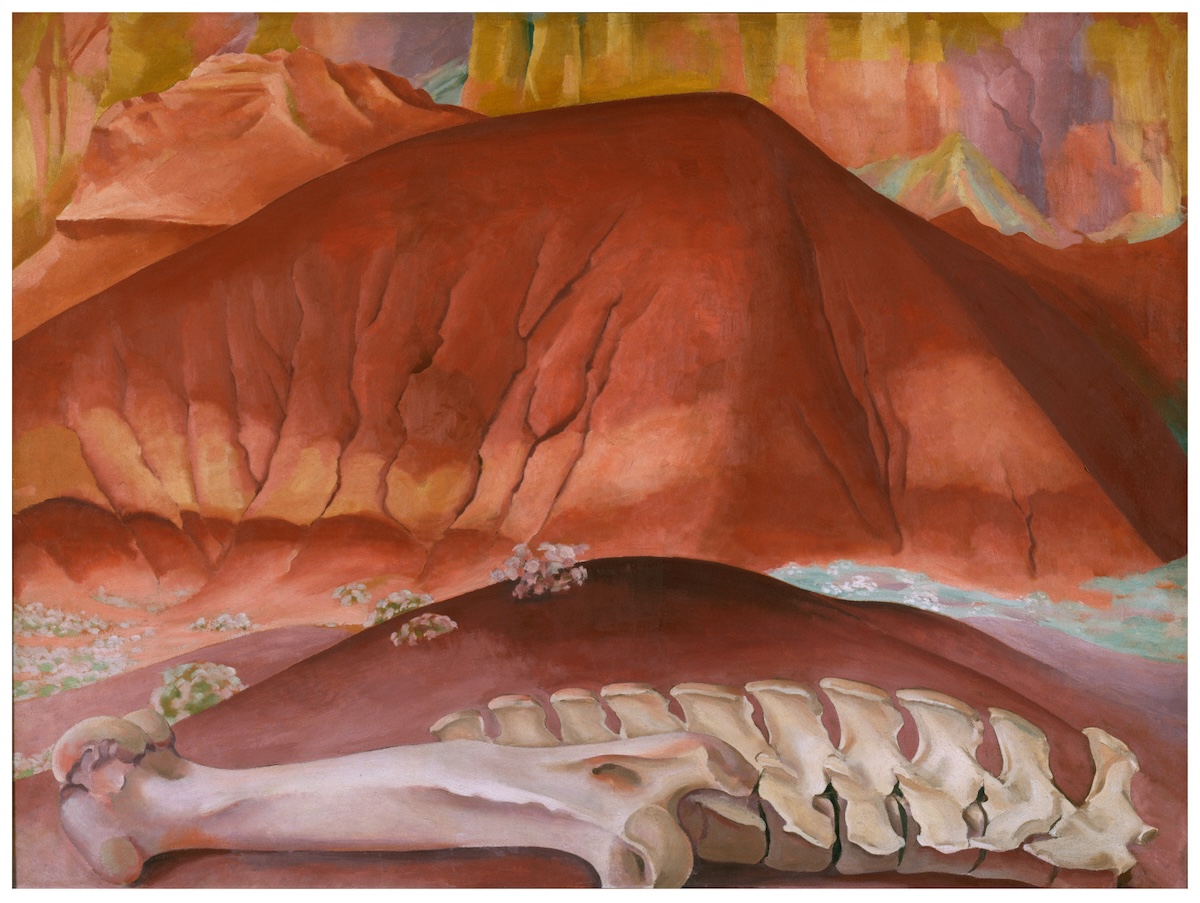
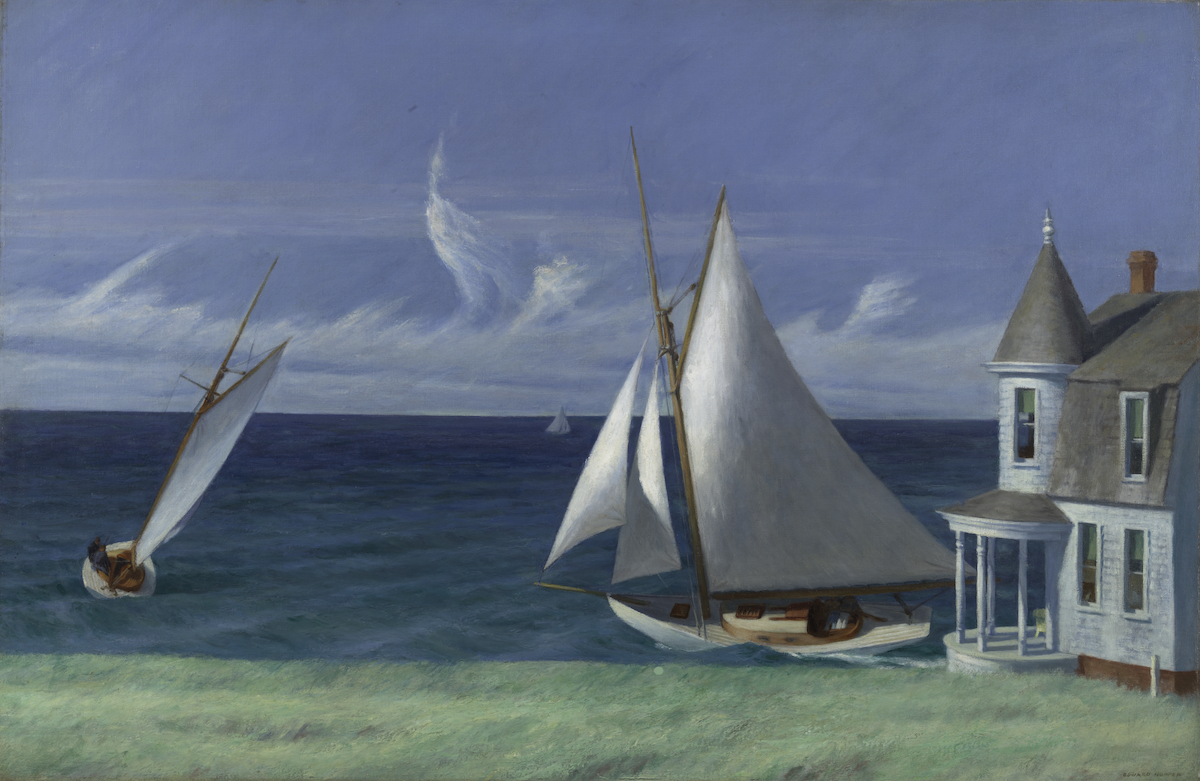
The exhibition also gives substantial attention to the natural world and landscape traditions, with works by Albert Bierstadt, Frederic Edwin Church, Winslow Homer, Rookwood Pottery, and Georgia O’Keeffe. That range across media and eras reinforces the exhibition’s larger thesis: American art has always been shaped by movement, environment, technology, and changing ideas of place. In “A Nation of Artists”, landscape is not just scenery; it becomes evidence of ambition, wonder, extraction, and transformation.
Equally important is the exhibition’s attention to conflict and underrepresented histories. The Civil War period is explored through works, including a monumental jar made and inscribed by the enslaved potter Dave, who later took the name David Drake. The inclusion of textiles, ceramics, and sculpture by Native American artists from Haida, Hodínöhšö:ni:h (Iroquois Confederacy), Diné, Hopi, and Pueblo nations, alongside contemporary Lenape artist Laura Watters Maynor (Delaware Tribe of Indians, Wolf Clan), expands the frame of what American art has been and continues to be. This is where “A Nation of Artists” feels especially necessary: it does not just broaden the checklist of artists; it broadens the terms of the conversation.
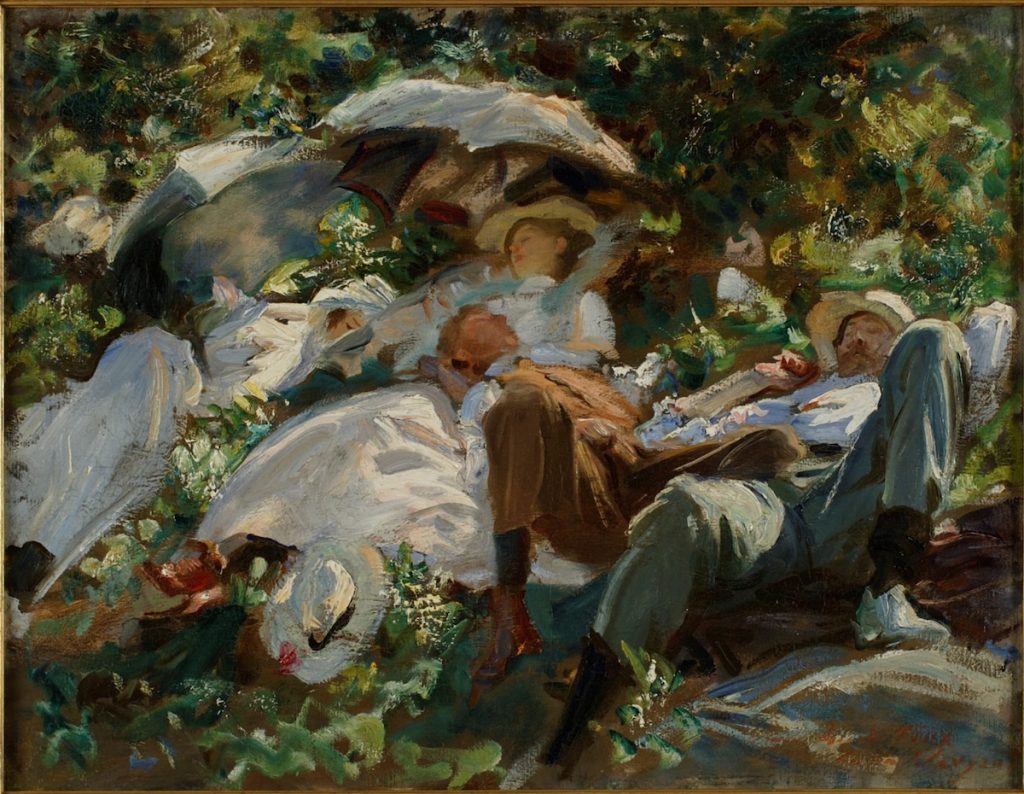
Impressionist and modern works deepen that arc with names such as Mary Cassatt, William Merritt Chase, Daniel Garber, John Singer Sargent, Jasper Johns, and Andy Warhol. Contemporary artists, including Njideka Akunyili Crosby, Rina Banerjee, María Berrío, Willie Cole, Clarity Haynes, Gisela McDaniel, Toyin Ojih Odutola, Catherine Opie, Stephanie Syjuco, Mickalene Thomas, and Kara Walker, further emphasize that American art is not a closed canon but an evolving field of voices, media, and perspectives. The result is an exhibition that appears to be as much about continuity and rupture as it is about celebration.
“A Nation of Artists” as a Philadelphia Milestone
This exhibition arrives at an extraordinary convergence point for Philadelphia. It is organized in conjunction with America’s 250th anniversary, while PMA celebrates its 150th anniversary in 2026, and PAFA marks its 220th anniversary and the reopening of its Historic Landmark Building. In other words, “A Nation of Artists” is not simply timed to history; it is actively participating in how that history is interpreted and shared.
John S. Middleton captured the spirit of the collaboration with a quote that underscores the exhibition’s broad public invitation: “Our aspiration is that this exhibition is for everyone—no prior knowledge of art or history required. We believe in the power of storytelling to connect people and are thrilled to partner with these two storied institutions to share the works that have brought our family so much joy and inspiration.”
He concluded, “Like baseball, art has the power to bring people together and surprise us when we least expect it. With every viewing, there’s something new to discover. It’s an honor to help bring American art to life in a new way during this very special 250th commemoration of our country’s founding.”
Kristen Shepherd, President and CEO of PAFA, frames the exhibition as a defining institutional moment: “This is a transformative moment for PAFA and for Philadelphia. As PAFA celebrates its 220th anniversary as America’s first art museum and school and the reopening of the Historic Landmark Building, we invite audiences into a renewed experience—one that reflects our storied legacy as the nation’s first art school and museum, while offering a powerful setting for a reimagined installation of our collection, enriched by works from the Middleton Family Collection.”
Shepherd continued, “In collaboration with the Philadelphia Museum of Art, we are proud to present A Nation of Artists in a way that is deeply rooted in PAFA’s history, yet forward-looking in its exploration of what defines American art today.”
Daniel Weiss, George D. Widener Director and CEO of the Philadelphia Museum of Art, emphasizes the broader reach and ambition of the project: “Commemorating the country’s semiquincentennial and PMA’s 150th anniversary, we are honored to collaborate with the esteemed Pennsylvania Academy of the Fine Arts and the rarely seen Middleton Family Collection. A Nation of Artists will span three centuries of art to trace the ever-evolving story of American creativity. This exhibition, a cultural milestone, will bring together voices from around the country through innovative programs, partnerships, and scholarship.”
From an editorial standpoint, that last phrase, “a cultural milestone,” feels exactly right. “A Nation of Artists” is the kind of exhibition that rewards repeat visits, sparks conversation across generations, and reminds us why Philadelphia remains one of the country’s most important art cities. For art enthusiasts who want both masterworks and fresh context, scholarship and accessibility, this is a must-see.
For expanded details on the exhibition at both institutions, supplemental guides are available, and additional information on programming, learning, engagement, and visiting details can be found at ANationofArtists.org.
Discover more from artsXhibit
Subscribe to get the latest posts sent to your email.