

Nicole Nikolich stitches the early internet into living memory
Paradigm Gallery + Studio is welcoming a debut solo moment that is meticulously crafted and instantly familiar: Nicole Nikolich’s user_history, a new body of work by the Philadelphia-based fiber artist also known as Lace in the Moon. On view from March 6 through March 29, 2026 at Paradigm Gallery + Studio in Old City, the exhibition opens with a public reception on Friday, March 6 from 6PM to 8PM.
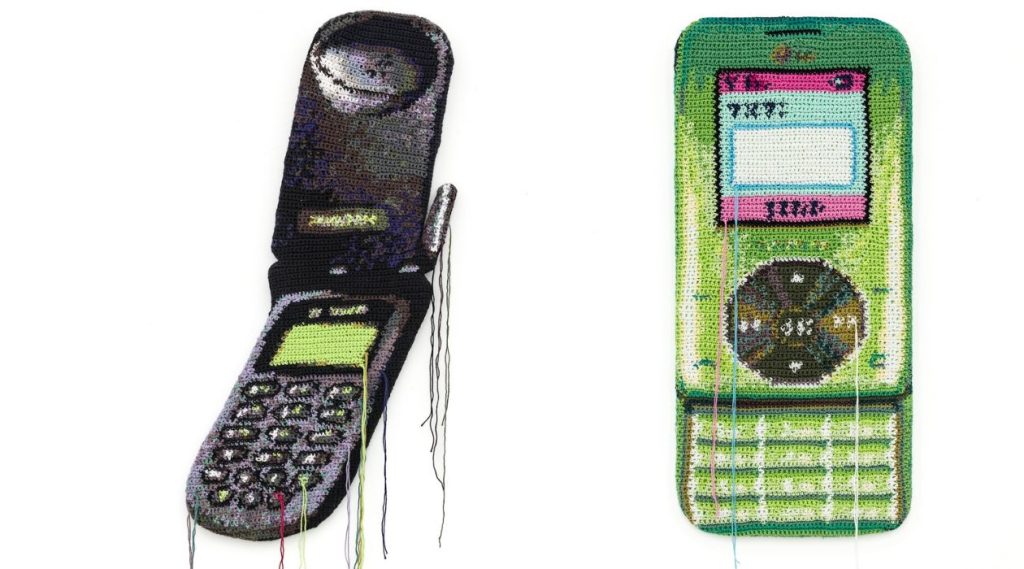
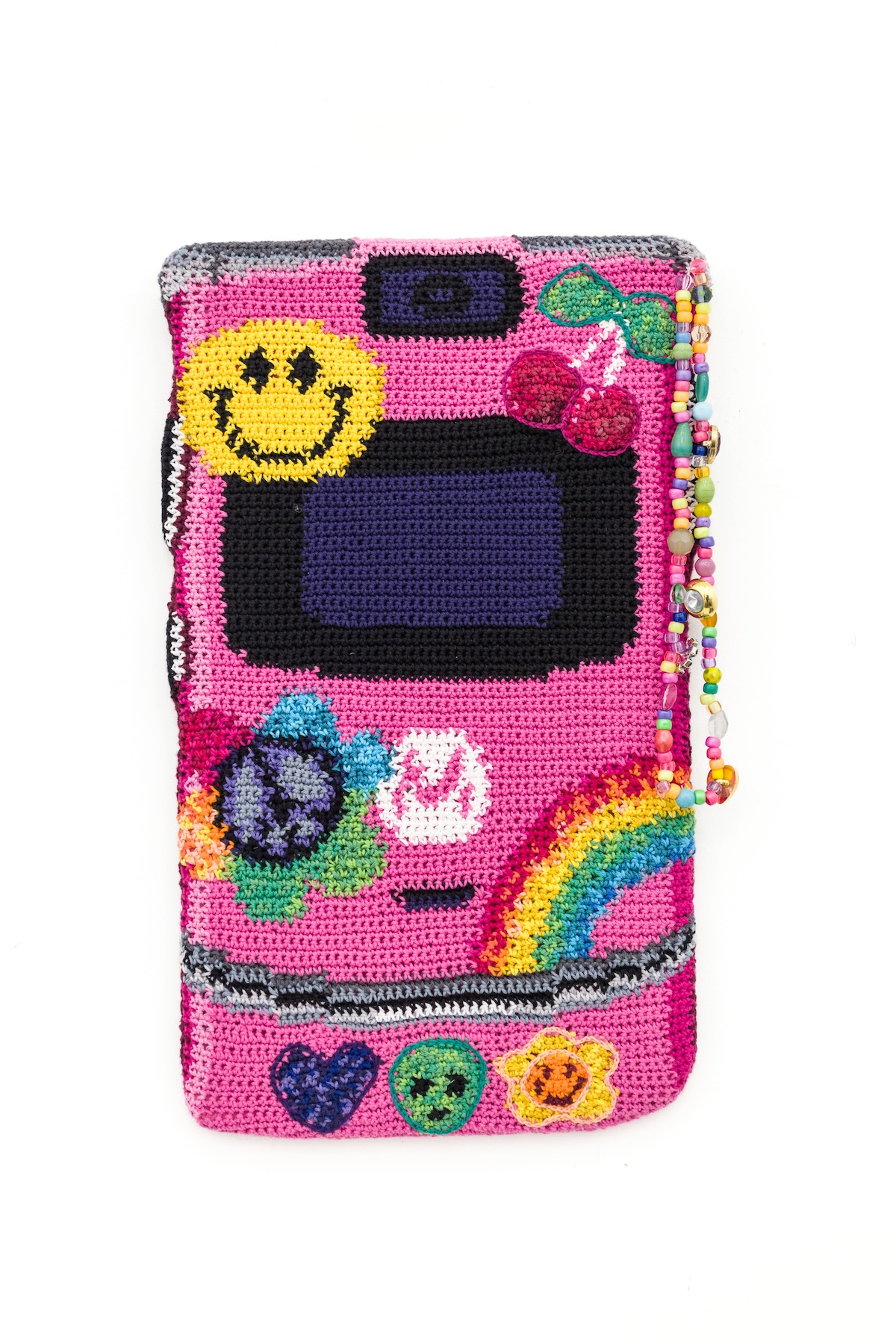
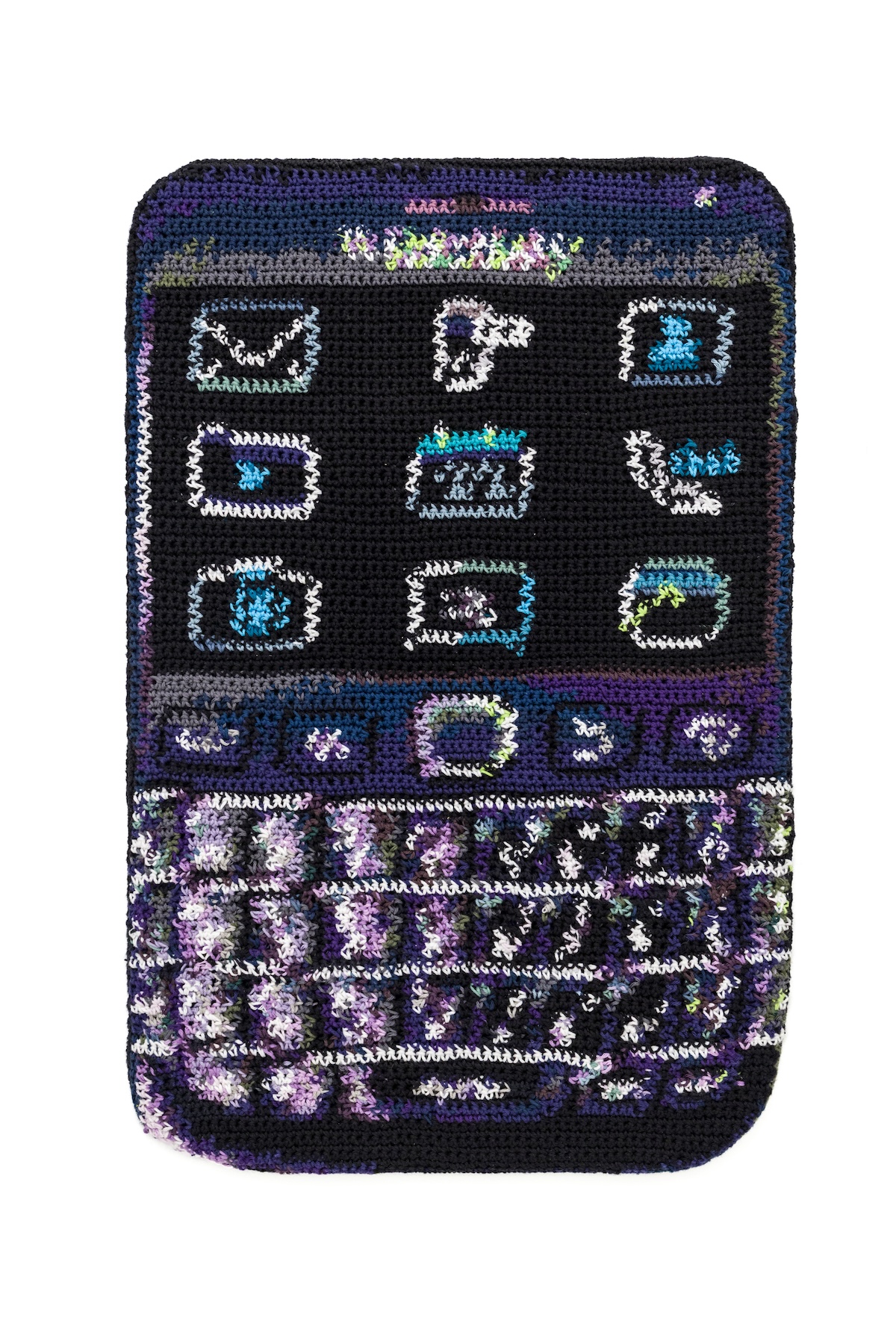
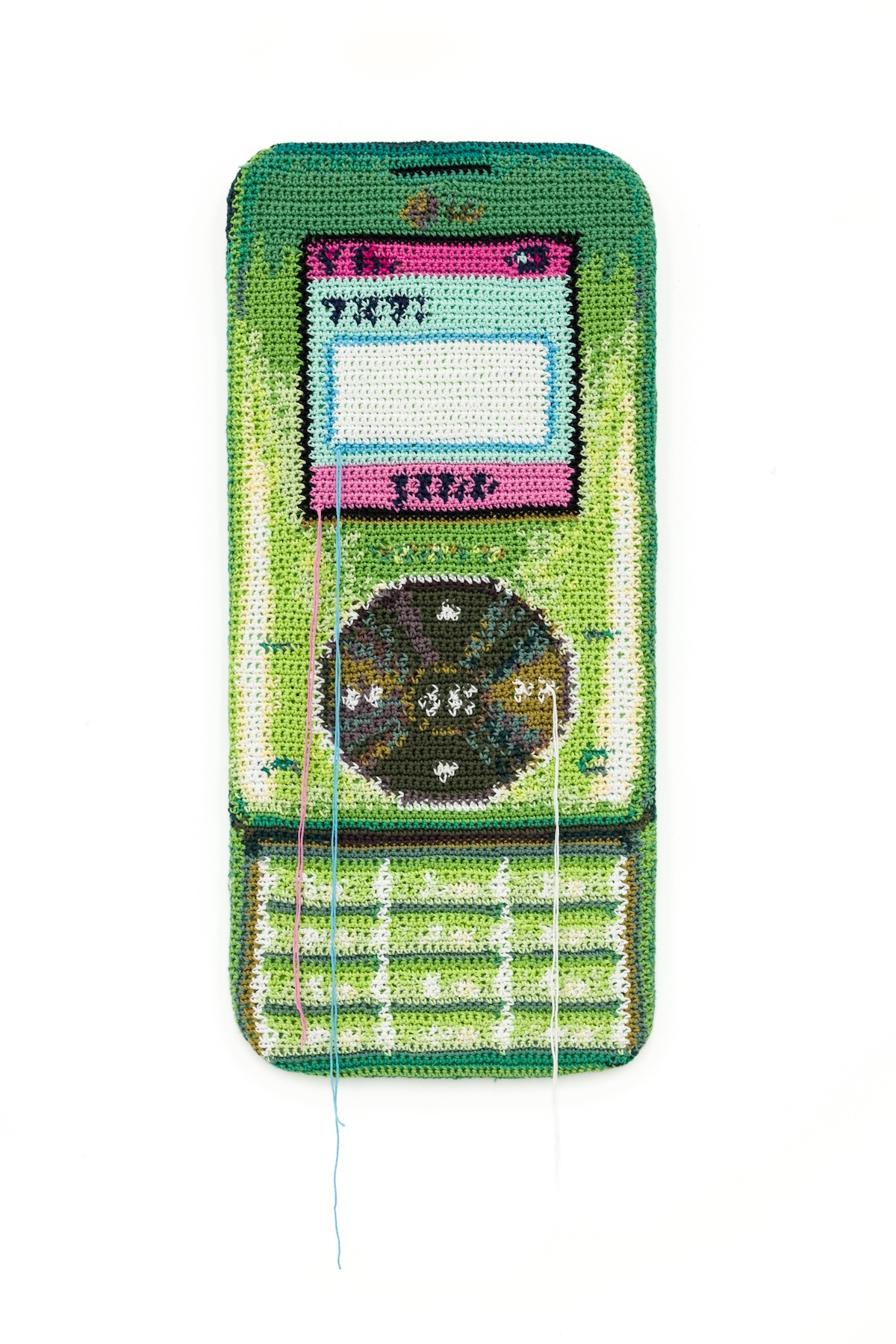
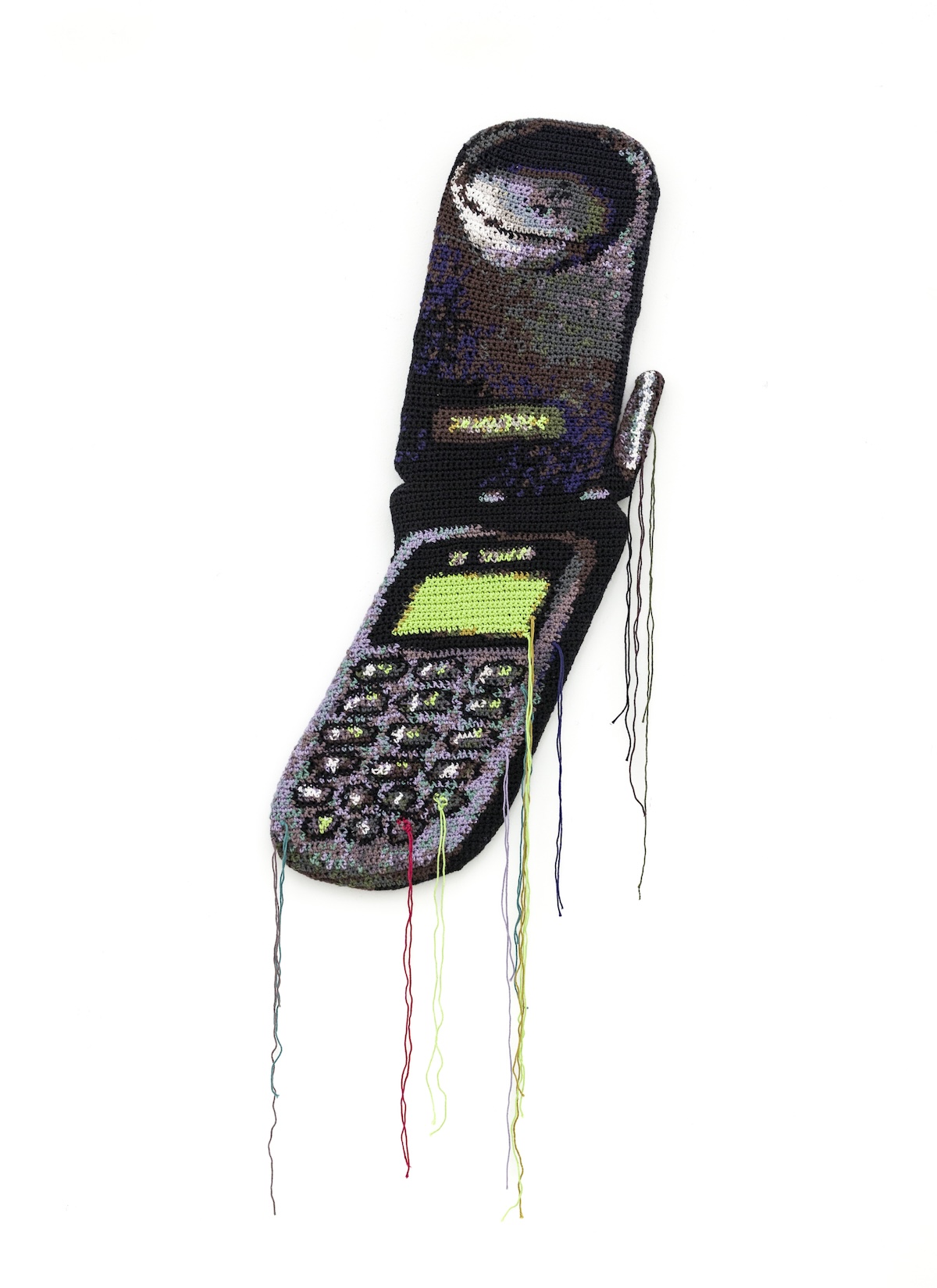
In “user_history”, Nicole Nikolich pays tribute to early internet nostalgia with more than 30 hand-crocheted flip phones, Gameboy consoles, and computer application icons pulled straight from the early 2000s visual vocabulary, turning items we’ve been trained to treat as disposable—obsolete tech, outmoded icons, dead interfaces—into contemporary artifacts worthy of slow looking. She builds these forms from thousands of pixel-like stitches, taking objects that once fit neatly in the palm of your hand and amplifying them into larger-than-life sculptures.
The scale isn’t just a flex of technique—it mirrors the emotional real estate these devices still occupy in millennial collective memory. The work doesn’t mock the era or treat it as kitsch. Instead, Nicole Nikolich elevates it, reminding viewers that yesterday’s “just tech” was also a bridge: to friendship, creative experimentation, and the first strange intimacy of being online together.
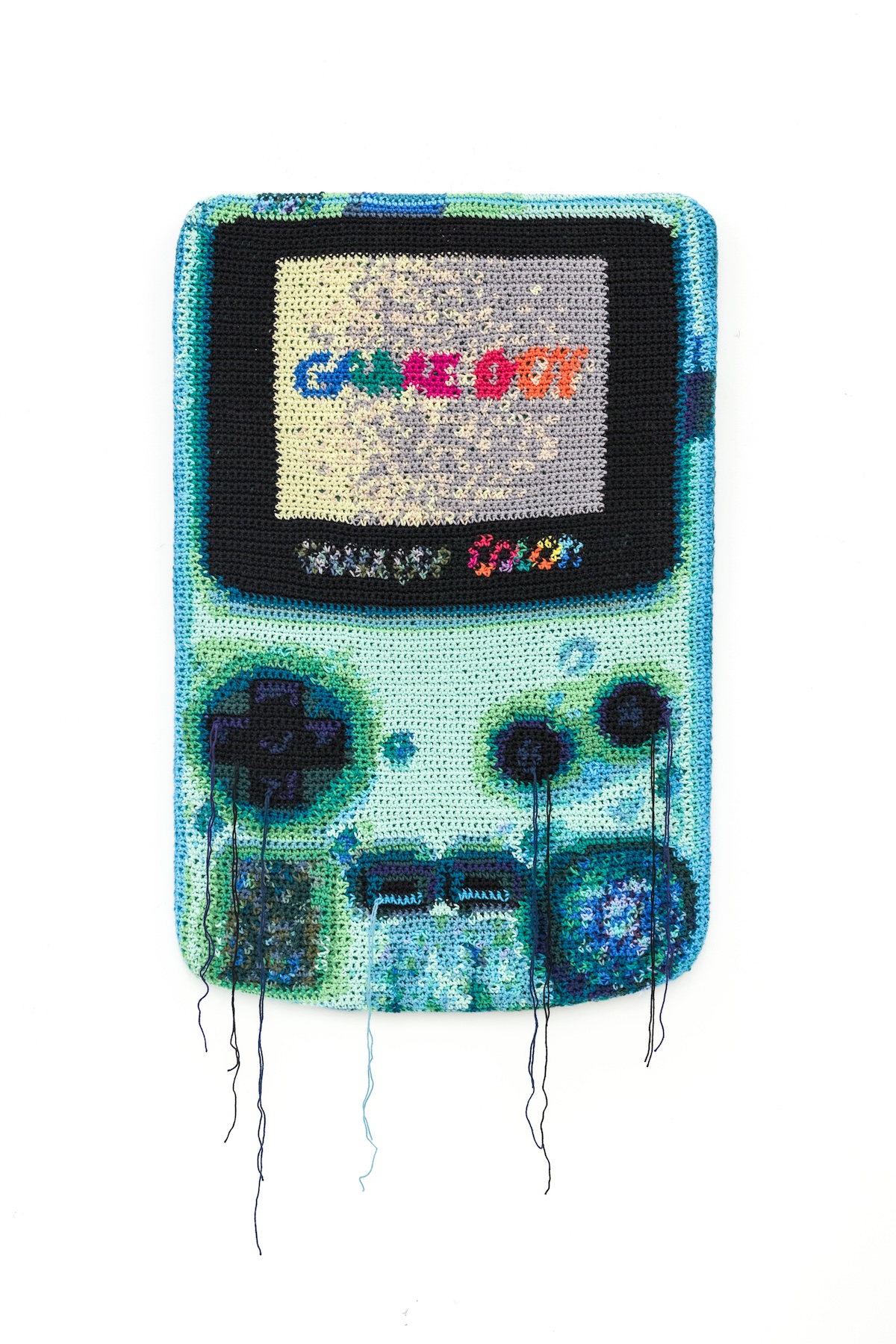
“Boomy67” 2026, Acrylic crochet mounted on wood
“Lisa Frank Taught Me About Style” 2026, Acrylic crochet mounted on wood
Nicole Nikolich and the backstory behind Lace in the Moon
Understanding Nicole Nikolich’s artistic arc deepens the resonance of this exhibition. She’s a Philadelphia-based crochet installation and street artist whose practice emerged through involvement in the local street art community, later expanding into larger-scale and permanent installations.
She received her BFA in Fashion Merchandising from Virginia Commonwealth University and is a self-taught fiber artist, a combination that helps explain her rare balance of design fluency and hands-on ingenuity. Over the years, her crochet has moved beyond “craft” expectations into ambitious public-facing work, with notable clients, and installations for institutions such as The Delaware Contemporary Museum, the Philadelphia Museum of Art, and Philadelphia International Airport.
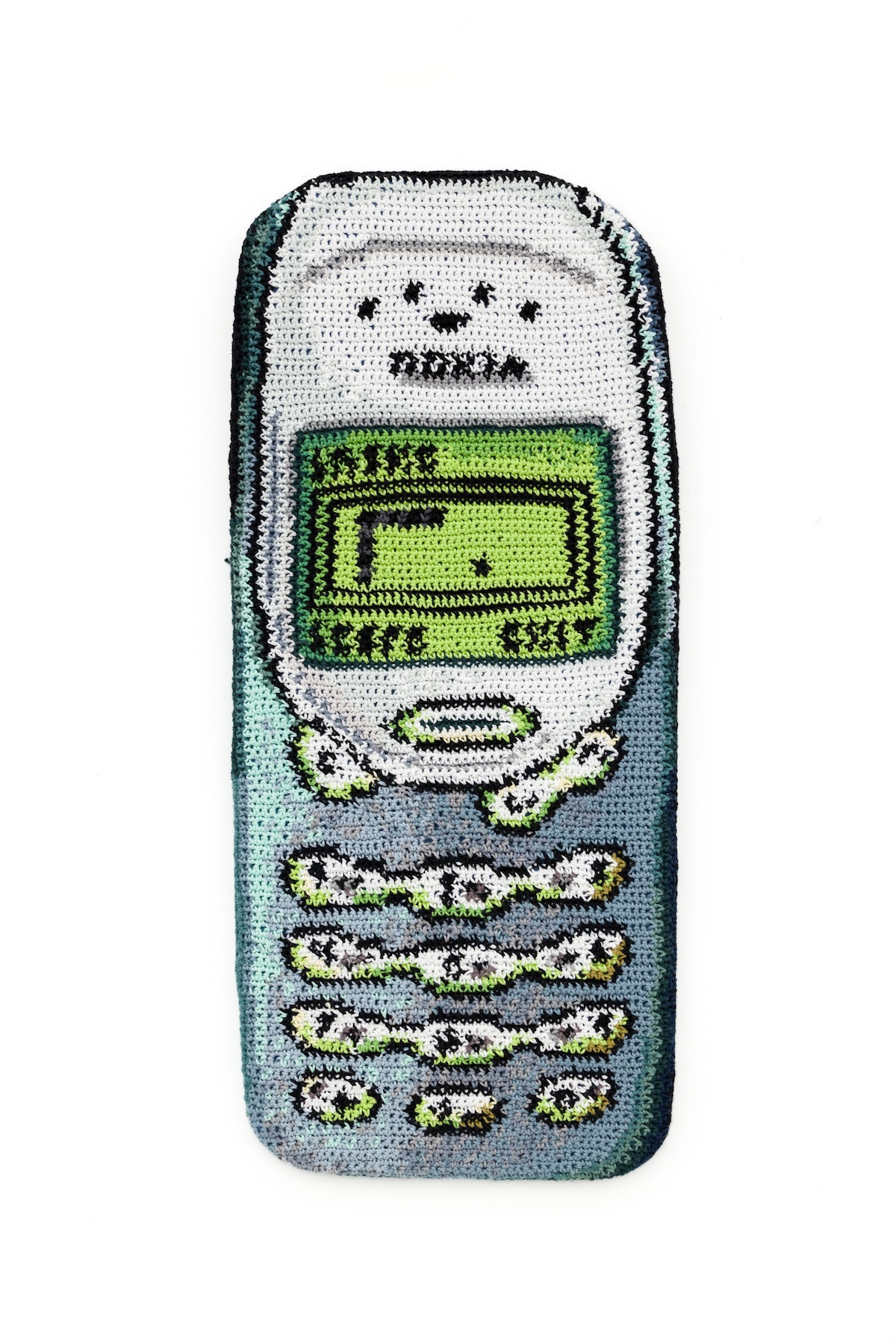
“Snake Pong” 2026. Acrylic crochet mounted on wood
“Never Mess With a Bitch With a Blackberry” 2026. Acrylic crochet mounted on wood
“user_history” is not nostalgia as surface aesthetic—it’s nostalgia as method and meaning. Nicole Nikolich’s current work examines early digital culture through the lens of fiber art, using crochet to reinterpret Y2K-era technology, internet imagery, and obsolete devices as contemporary artifacts.
The exhibition frames nostalgia as a tool for emotional reconnection and inner child healing, encouraging viewers to revisit formative digital experiences with curiosity, comfort, and a renewed sense of play. In that sense, Nicole Nikolich is working at the intersection of craft, public art, and contemporary culture, and “user_history” is a culmination—her largest body of work to date, and one that makes a compelling case for crochet as both archival language and sculptural force.
Nicole Nikolich’s “user_history” turns pixels into touchable relics
The heart of “user_history” is its translation: the early internet’s pixelated visual language rendered by hand, stitch by stitch, into tactile reality. As Nicole Nikolich recreates these objects, she reflects on the memories they hold—texting on a T9 keypad, drawing with bitmap software programs, and making friends in online chatrooms. It’s easy to forget how physical those experiences were: the click of keys, the glow of small screens, the clunky weight in a pocket, the ritual of logging on. Here, those sensations return, not through functioning hardware, but through the slow intelligence of fiber.
Although early internet motifs have appeared before in Nicole Nikolich’s work, this exhibition is distinctly personal—she is rendering these familiar objects through her own lens, inspired by the act of stumbling across an old phone or old gaming system and being instantly flooded with childhood memories. What might read as vintage electronics becomes, in her hands, a sentimental totem for how technology shaped social lives and creative identities.
She approaches the early 2000s almost like an anthropologist, identifying the era as a vital channel for escape from everyday life—one where she could connect with strangers around the world and learn to create with early software like KidPix and Microsoft Paint.
And then there’s the process, which is its own quiet marvel. Before touching any yarn, Nicole Nikolich engages in deep exploration and preparatory sketches to make each flip phone or handheld console authentic to the one she had as a teenager. She gathers reference images, digitally manipulates them into crochet patterns, then customizes and maps every color until the result becomes a hyperrealistic copy. That devotion to specificity is what preserves the magic: late-night chats, hours glued to a console screen, the strange pride of carrying clunky gadgets that felt like portals.
By choosing crochet—historically significant, approachable, and undeniably human—Nicole Nikolich introduces a tactile element that makes the pieces feel real in a way pixels alone never can. She even frames the selection as a kind of curatorial act, comparing it to building a MySpace page, and the analogy lands: each object is a choice, a signal, a fragment of identity offered up for connection.
Seen together, the works in “user_history” don’t merely reference the early internet—they reconstruct its emotional architecture. In a moment when technology changes faster than we can metabolize it, Nicole Nikolich argues for preservation, not out of sentimentality, but because these devices and motifs can be catalysts for sharing memories and safe havens for those who needed escape. That idea—comfort as culture, craft as archive—gives the exhibition its staying power.
Discover more from artsXhibit
Subscribe to get the latest posts sent to your email.