
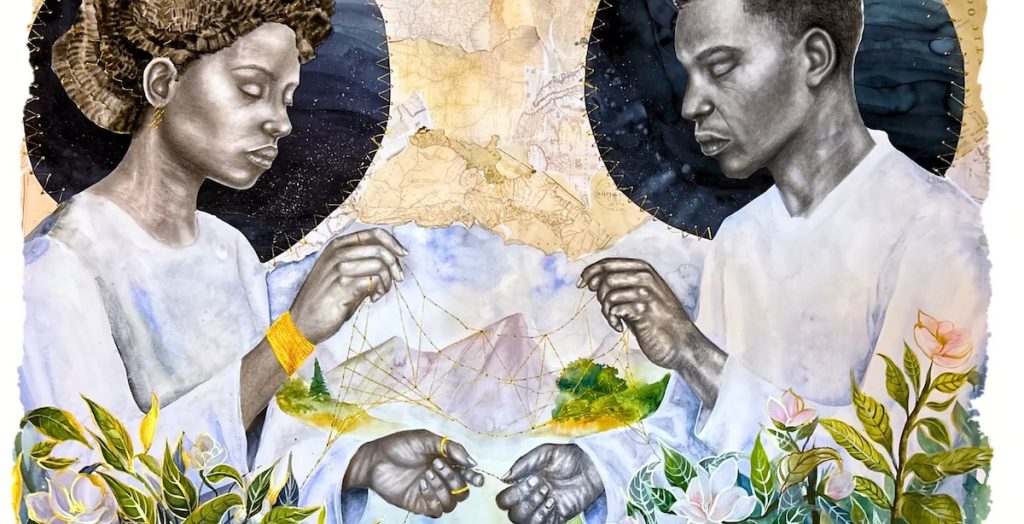
Morgan Overton’s new solo exhibition opens on a provocation that most anniversary programming avoids: as the United States reaches 250 years, what does the country look like in 250 more? America: 500, on view at NoName Gallery in Philadelphia’s Chestnut Hill neighborhood from July 3 through August 30, 2026, takes that question seriously enough to build an entire body of work around it.
Morgan Overton’s Practice: History as Active Force
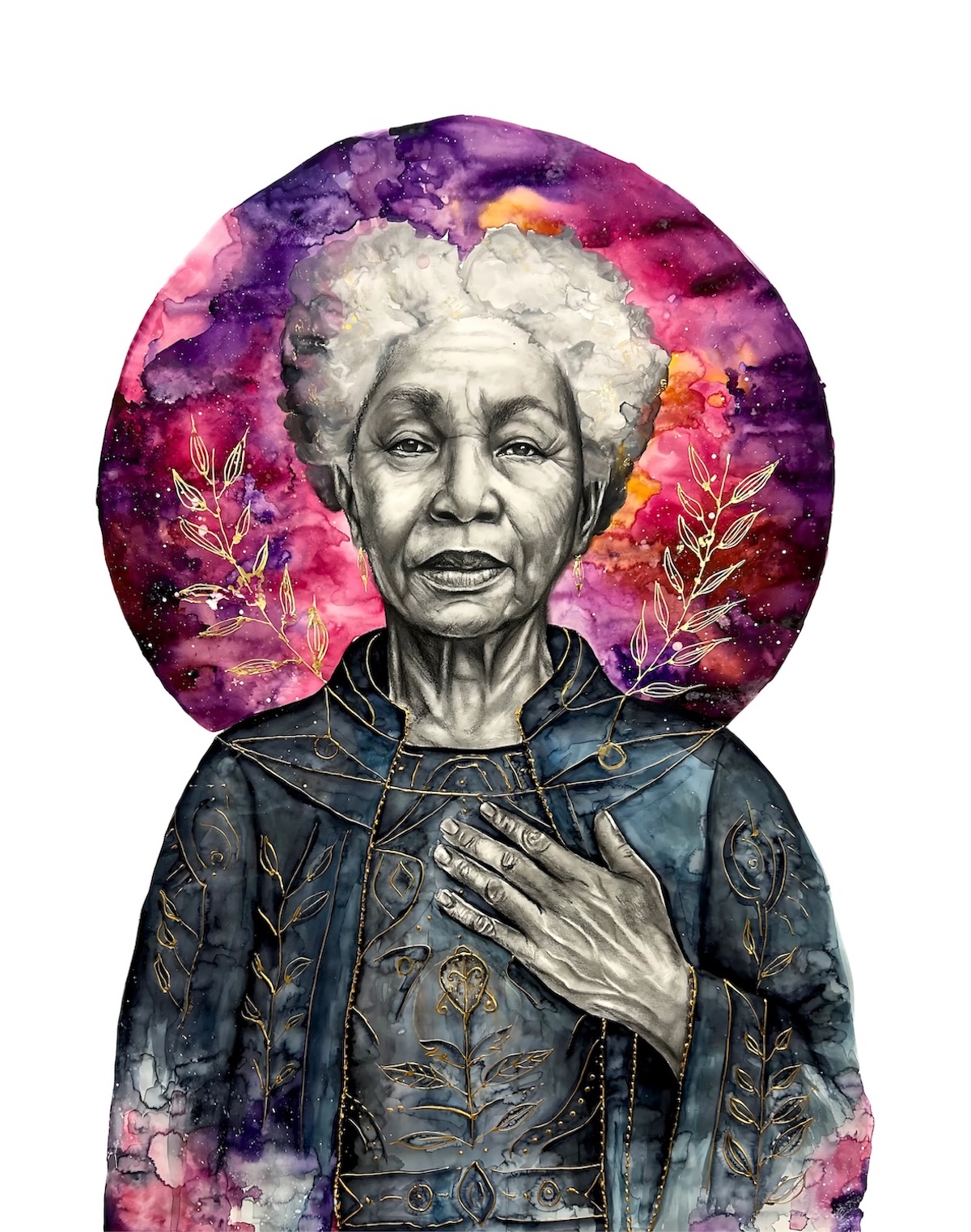
The exhibition works across graphite, watercolor, and layered mixed media to construct meditative figurative work that refuses to treat Black American history as a fixed document. Overton draws from genealogical research and Afrofuturist thought to position that history as ongoing — not a record of what was, but a resource for what collective agency might still produce. Her compositions build ethereal, symbolic environments that feel simultaneously historical, contemporary, and speculative, centering Black interiority and ancestral memory as primary subjects rather than as backdrop.
Overton holds a Master of Social Work from the University of Pittsburgh with a focus on community organizing, and from 2023 to 2025 served as the inaugural Artist-in-Residence at Pitt’s Frederick Honors College under a program she titled “Democracy in Focus” — exploring art as a tool for democratic preservation through exhibitions, workshops, and interdisciplinary dialogue. Her practice resists narratives that reduce Black existence to struggle, creating space instead for what she describes as sacred presence and self-determination.
That specific framing — democracy as something to be actively tended rather than inherited — threads directly through America: 500, which treats the country’s founding ideals not as achievements but as ongoing obligations. The exhibition examines the tension between those ideals and lived realities, asking what care, imagination, and collective will might build over the centuries ahead.
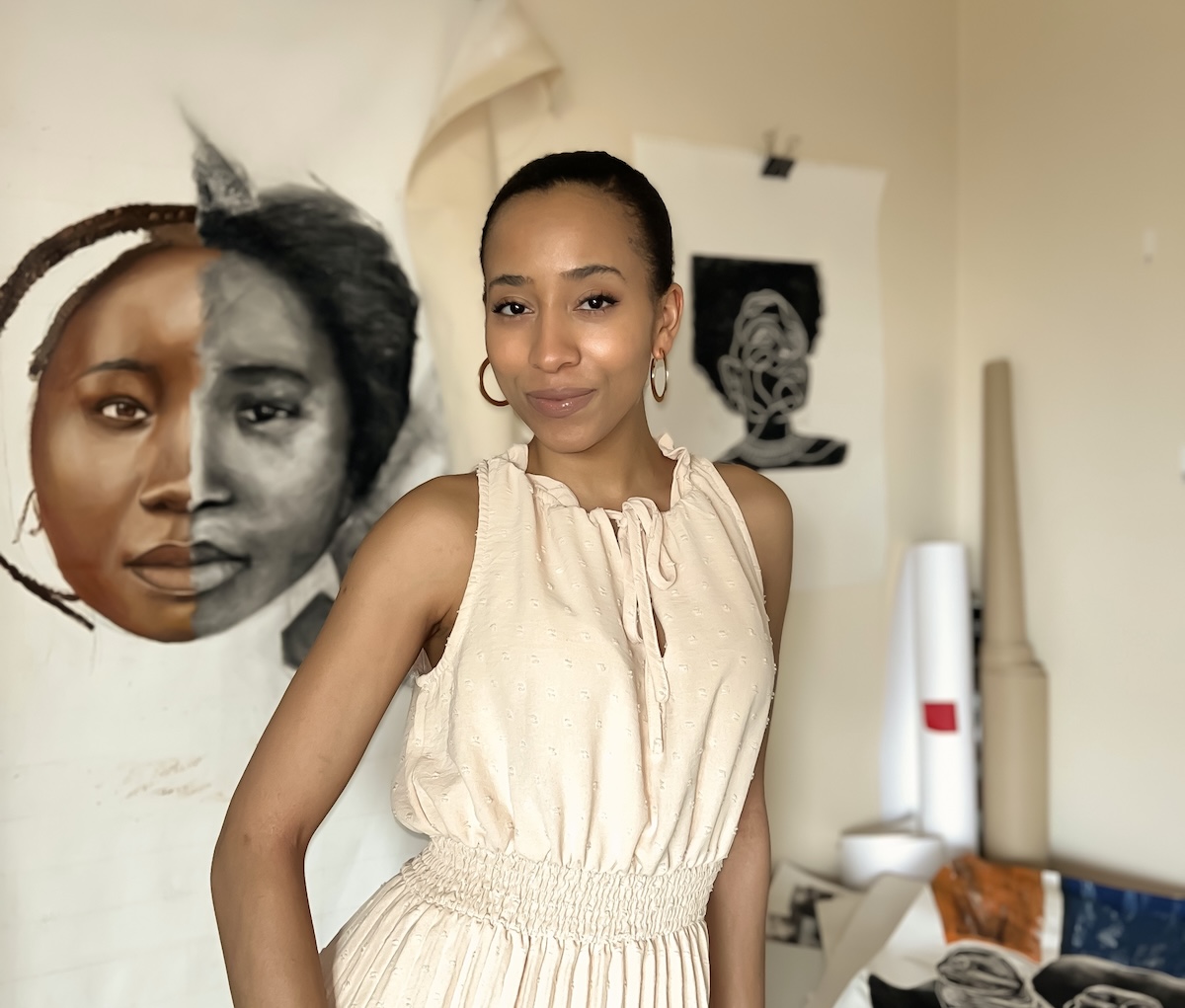
What Morgan Overton Is Building Against
The figurative mixed-media works anchor the exhibition in the body and the archive simultaneously. That formal choice — keeping figuration and collage material in the same frame — keeps the work from floating into abstraction. The genealogical fragment, the watercolor wash, the archival element: each insists on specificity within a larger speculative frame. Moments of reflection, joy, and belonging recur throughout, positioned not as private sentiment but as political acts.
NoName Gallery curator Jonene Lee has positioned the show as an invitation for viewers to move beyond reflection on the country’s founding and to consider what role each person plays in shaping future civic possibility.
Morgan Overton’s solo exhibition I Stand On Their Shoulders was presented at the US Capitol’s Russell Senate Building in 2023, and her work has appeared in group exhibitions at the London Art Biennale, at Zarin Art Gallery in Helsinki, and at La Maison Baldwin in St. Paul de Vence, France. She has also curated large-scale exhibitions at the Carnegie Museums of Pittsburgh and the August Wilson African American Cultural Center, and was recognized with the Carnegie Museums’ Community ARTivist Award in 2024.
America: 500 opens July 3 with a public reception from 6:00 to 9:00 PM and runs through August 30 at NoName Gallery, 8127 Germantown Avenue, Philadelphia. In 2022, Overton made history as the first Black woman elected Vice Chair of the Allegheny County Democratic Party — a fact that gives this exhibition’s investment in democratic possibility a grounding that extends well beyond the conceptual.
You may also like
-
Odds in the Absurd Puts Dada’s Oldest Question in Front of Six InLiquid Artists
-
Neil Anthony Edwards Traces Fashion From the 1910s to LeBron at Morton Contemporary
-
Made Over Time Puts Two Half-Century Painting Practices in One Room
-
“No Other Place to Go”—5 Artists Turn Climate Data Into Human Experience at InLiquid Gallery
-
Erik Spehn Strips the Ground Away in “Waves Become Wings”