

There is a particular kind of ambition in asking an artist to organize a group exhibition rather than a curator — and then asking that artist to share the organizing authority with three of their peers. That is the structural premise of Directionless, opening June 21 at Hauser & Wirth Menorca and running through October 25, 2026. Rashid Johnson, one of the most critically discussed American artists working today, has organized a show built not around a singular curatorial vision but around a deliberately polyphonic one — and in doing so, made the exhibition’s structure mirror its central question.
The premise behind Directionless — Rashid Johnson’s organizing thesis — is direct: we are living in a moment of profound disorientation. Inherited narratives feel insufficient. Stable identities and the systems that once structured social and aesthetic life are under pressure from every direction. Rather than offering resolution, Directionless asks something harder — how do artists productively inhabit that uncertainty? How do they develop new vocabularies and provisional orientations when established coordinates fail?
How Rashid Johnson Organized Directionless

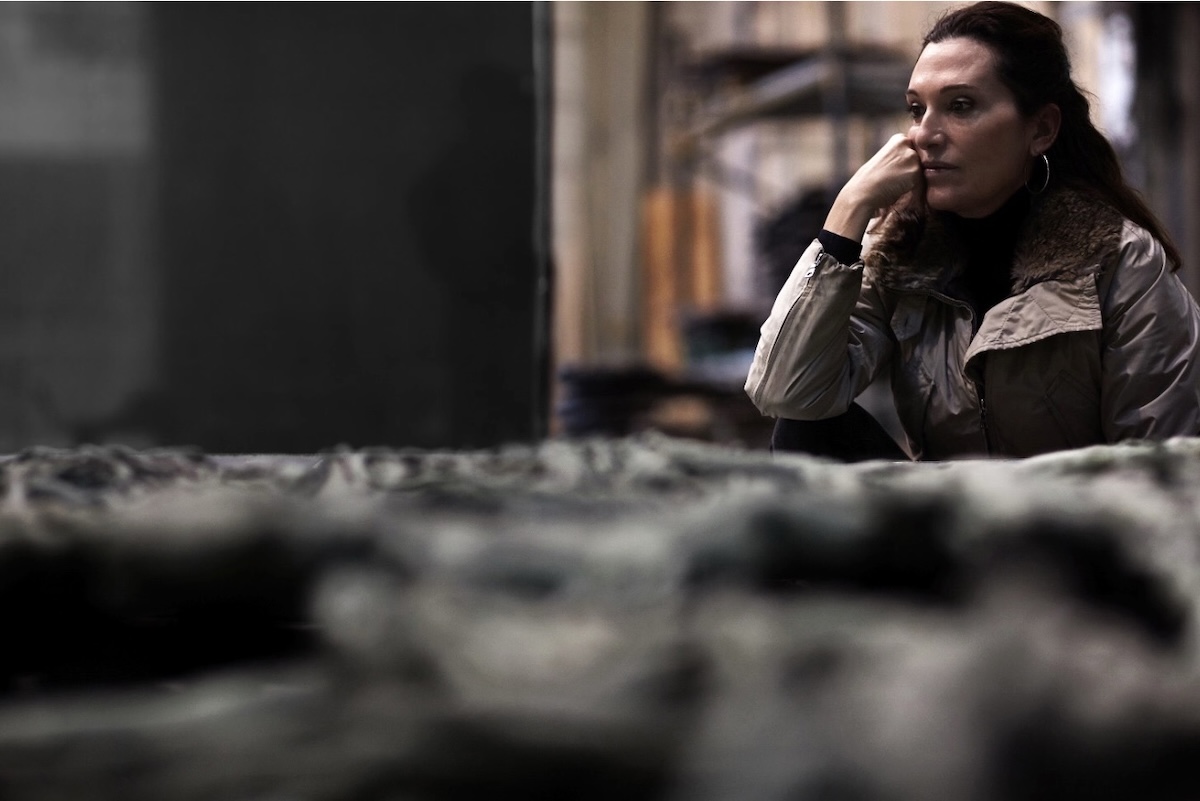
To build indeterminacy into the show’s very structure, Johnson invited three artists — Firelei Báez, Charles Gaines, and Cristina Iglesias — to each nominate artists from outside the gallery’s roster alongside his own selections. The result refuses singular authorship. It proposes instead that creative practice itself might be a form of orientation-making in an illegible present — and that the most honest way to represent that is to distribute the curatorial act among multiple sensibilities.
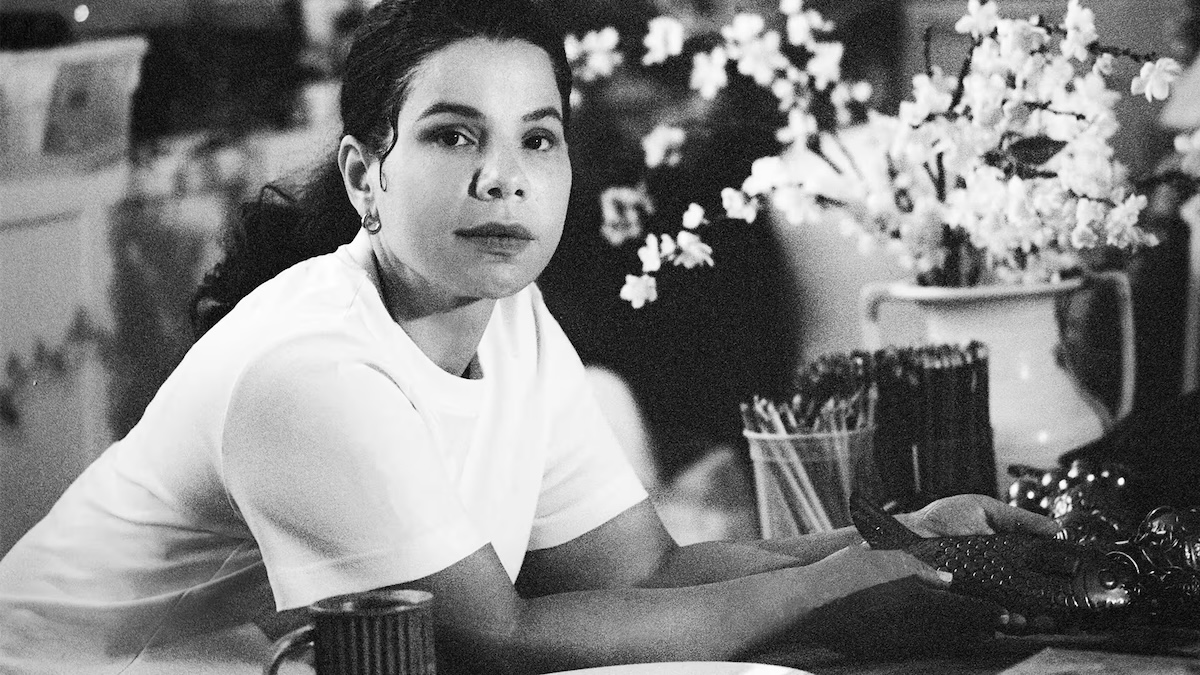
Rashid Johnson is no stranger to Hauser & Wirth Menorca. His solo exhibition Sodade opened the gallery’s 2022 season on Illa del Rei, and the relationship between his practice and that particular island setting has been generative. What’s different here is scale and structure: Directionless spans all eight galleries plus an open-air presentation, and the outdoor sculpture trail has been organized by Iglesias, who invited Ali Cherri, Mona Hatoum, and Rayyane Tabet outdoors while Yto Barrada and Sigalit Landau’s works appear in gallery.
The Artists in Directionless at Hauser & Wirth Menorca
Rashid Johnson’s Directionless assembles twenty-eight artists from ten countries. The confirmed list is already a study in genuine international range rather than cosmetic diversity. The Mediterranean and diaspora cluster is particularly resonant given the Menorca setting: Mona Hatoum (Palestinian-British), Yto Barrada (Moroccan-French), Ali Cherri (Lebanese), Rayyane Tabet (Lebanese), and Cristina Iglesias (Spanish) bring a set of relationships to land, displacement, and material culture that speak directly to an island site in the western Mediterranean.
The generational range is equally deliberate. Georg Baselitz — at 87, the elder statesman of German Neo-Expressionism — sits alongside Hanna Hur, Claire Chambless, and Hannah Levy, artists whose practices are still in active formation. Julie Mehretu, whose large-scale abstract canvases have made her one of the defining painters of the past two decades, shares the exhibition with Alteronce Gumby, whose work with color and chromatic perception is quieter but no less rigorous. Joiri Minaya’s investigations of colonial visual culture and Teresita Fernández’s material explorations of landscape and perception represent the Dominican-American and Cuban-American perspectives within the group.
The full confirmed roster: Firelei Báez, Yto Barrada, Georg Baselitz, Claire Chambless, Ali Cherri, Latifa Echakhch, Teresita Fernández, Charles Gaines, Todd Gray, Alteronce Gumby, Mona Hatoum, Hugh Hayden, Hanna Hur, Cristina Iglesias, Rashid Johnson, Michael Joo, Sigalit Landau, Hannah Levy, Joiri Minaya, Julie Mehretu, and Rayyane Tabet — with seven additional artists from the full 28-person roster to be confirmed ahead of opening.

Hauser & Wirth Menorca and the Setting for Directionless
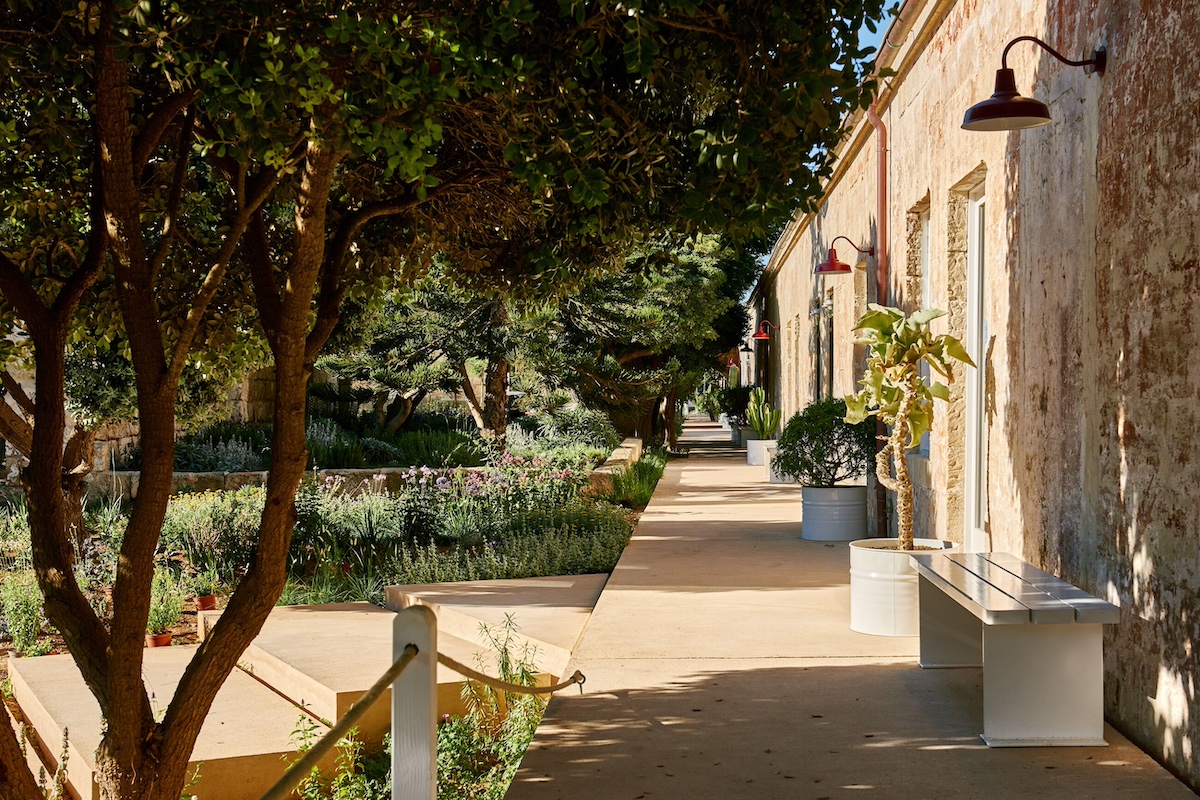
The setting is not incidental. Hauser & Wirth Menorca occupies Illa del Rei — King’s Island — in the port of Maó, a small island in the western Mediterranean accessible only by shuttle boat. The gallery itself is housed in a restored 18th-century naval hospital, converted by Paris-based architect Luis Laplace and opened in 2021. Eight galleries, an outdoor sculpture trail, and a working cantina under an olive-tree forest. Entry is always free.
There is something fitting about staging an exhibition called Directionless in a place that requires you to leave the mainland, board a boat, and arrive at an island that was once a military hospital. The physical conditions of the visit — the water crossing, the restored stone buildings, the Mediterranean light — are themselves a kind of productive disorientation. Rashid Johnson’s Directionless opens June 21. It runs through October 25. The shuttle boat is bookable through the Hauser & Wirth Menorca website, and the exhibition, like everything at the gallery, is free to attend.
You may also like
-
“No Other Place to Go”—5 Artists Turn Climate Data Into Human Experience at InLiquid Gallery
-
Erik Spehn Strips the Ground Away in “Waves Become Wings”
-
Zoya Cherkassky’s American Cooking Turns a Vintage Cookbook Into a Study of Displacement
-
“Shimmer—Dreaming the Posthuman” Argues That Care, Not Extinction, Is the Point
-
“New Now IX” at InLiquid Gallery