
A thirty-year gap in institutional attention is itself a critical statement. The James McNeill Whistler at the Tate Britain 2026 retrospective — opening May 21 and running through September 27 at Tate Britain — arrives not as a routine survey but as a recovery operation, and a necessary one. Whistler’s influence on the formation of modern visual culture is so thoroughly absorbed into the canon that the source has become nearly invisible. This retrospective is an occasion to trace the line back.
Whistler is a painter whose reputation has been perpetually distorted by the life. The 1878 libel case against Ruskin, which he won for one farthing, made him famous in a way that had little to do with what was actually happening on his canvases. The persona — the wit, the combativeness, the dandy posture — has served as a kind of interference pattern for the serious critical reception his work deserves. The Tate, presenting the largest European survey in three decades, has the material and the institutional authority to cut through it.
James McNeill Whistler at the Tate Britain 2026: What the Nocturnes Actually Are
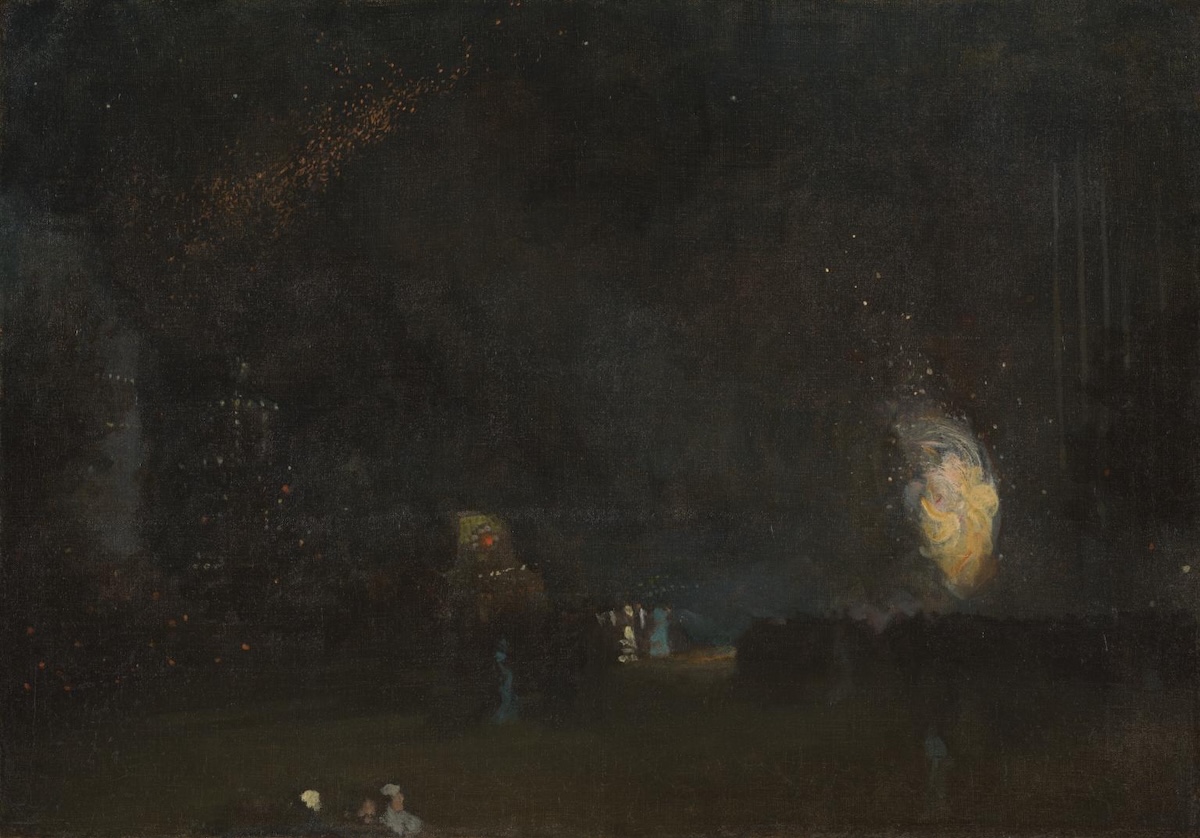
The Nocturne series is where the critical argument for Whistler’s centrality to the history of abstraction is most immediately visible. His atmospheric canvases of the Thames at night — tonally compressed, stripped of narrative incident, organized by feeling rather than subject — anticipate the logic of tonal abstraction by several decades. The famous Nocturne in Black and Gold: The Falling Rocket, the canvas Ruskin called a pot of paint flung in the public’s face, reads now as a claim so obviously vindicated that it is easy to forget how genuinely radical it was. The James McNeill Whistler at the Tate Britain 2026 exhibition puts that claim in front of the viewer’s eyes across the full arc of the series.
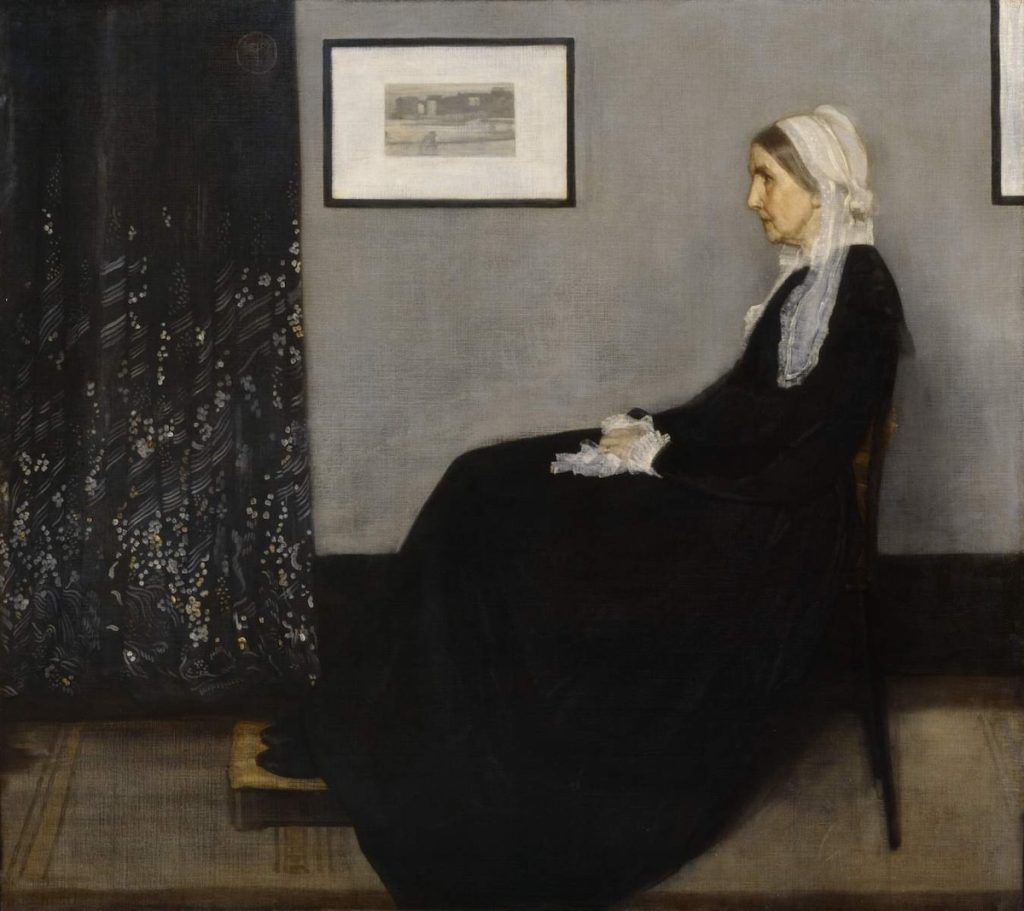
The portraits operate on different terms but reach for the same goal: the primacy of surface, tone, and pictorial organization over narrative or moral content. Arrangement in Grey and Black No. 1 — the painting universally known as “Whistler’s Mother” and just as universally misread as a sentimental domestic scene — is in fact one of the most formally austere portraits of the nineteenth century. Its emotional register, such as it is, derives entirely from compositional decision. That is a radical position to have occupied in 1871.
The Japonisme Thread That Runs Through Whistler’s Practice
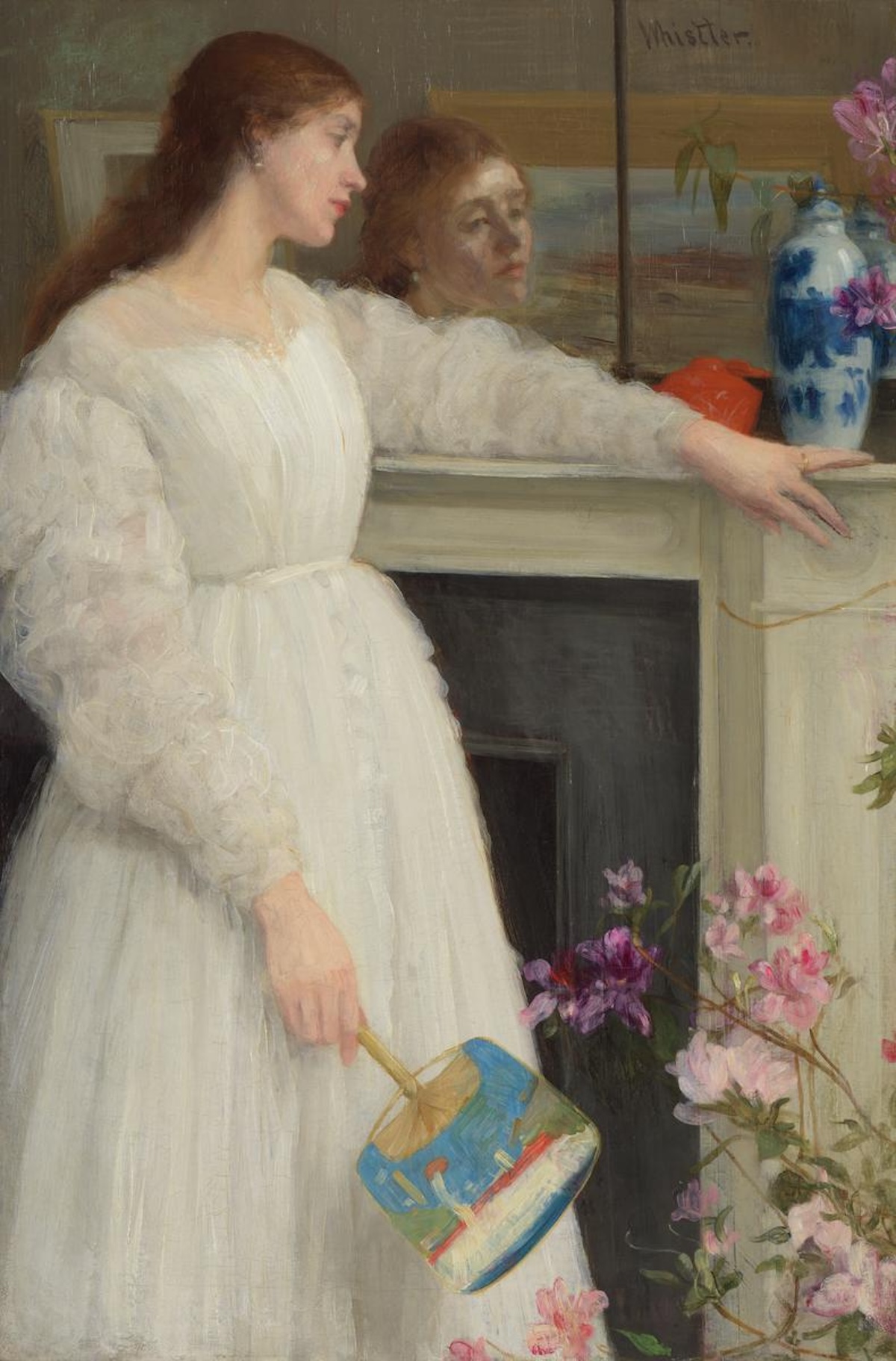
The third strand of Whistler’s practice — his sustained, generative engagement with Japonisme — is the one that the thirty-year institutional gap has left most underexamined. The asymmetry, the flattened picture plane, the decorative line derived from Japanese woodblock printing: these weren’t surface borrowings but a sustained rethinking of what a picture is supposed to do. His insistence on art divorced from narrative and moral instruction cleared the ground for Art Nouveau, Symbolism, and beyond. The James McNeill Whistlerat the Tate Britain retrospective, organized with the depth the Tate’s collection and access to international loans affords, is positioned to make that argument visually rather than just historically — which is the only argument for a painter that ultimately matters.
For those who track the question of whose influence became invisible by becoming foundational, this retrospective belongs alongside the Barnes Foundation’s Japanese American art and design survey as an occasion to see the roots of the modern visual language with proper clarity.
James McNeill Whistler at the Tate Britain 2026: Visit Information
James McNeill Whistler runs through September 27 at the Tate Britain, London. Free admission. For a retrospective making a case this long overdue, that matters. The etchings deserve particular note for any visitor with an interest in printmaking. Whistler’s etched work — detailed, tonal, spatially complex — had an influence on the medium comparable to his effect on painting, and is rarely given equivalent room. The James McNeill Whistler presentation gives it that room.
Images courtesy of Tate Gallery
You may also like
-
Made Over Time Puts Two Half-Century Painting Practices in One Room
-
“No Other Place to Go”—5 Artists Turn Climate Data Into Human Experience at InLiquid Gallery
-
Erik Spehn Strips the Ground Away in “Waves Become Wings”
-
Zoya Cherkassky’s American Cooking Turns a Vintage Cookbook Into a Study of Displacement
-
“Shimmer—Dreaming the Posthuman” Argues That Care, Not Extinction, Is the Point