
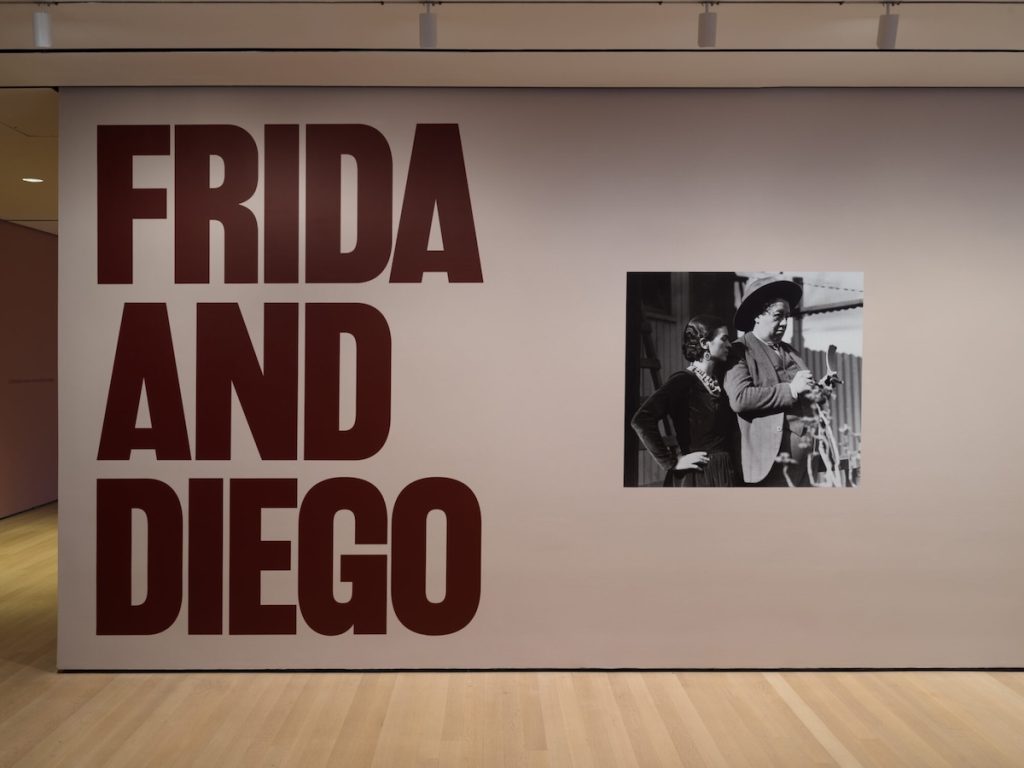
The decision to hand a MoMA gallery to an opera stage designer is not a neutral curatorial choice. When the Museum of Modern Art commissioned Jon Bausor — the same designer behind the Metropolitan Opera’s El Último Sueño de Frida y Diego — to build the installation for Frida and Diego MoMA: The Last Dream, it was wagering that theatrical grammar could open the paintings rather than crowd them. On the evidence, the wager pays off.
Kahlo’s canvases are among the most over-circulated images in twentieth-century art. They arrive at any exhibition carrying a weight of reproduction, merchandise, and cultural projection that most painters never have to contend with. The challenge for any institution presenting them is to create conditions that allow actual looking rather than recognition. Bausor’s installation — spatial, atmospheric, drawn from the same visual logic he built for the Lincoln Center stage — does that. It disrupts the expectation of a conventional white-cube hang before the viewer gets to the first canvas, which is precisely the disruption the work needs.
Frida and Diego MoMA: What the Paintings Reward When You Actually Look
Six Kahlo paintings and a drawing sit at the center of the Frida and Diego MoMA presentation, alongside more than a dozen Rivera works. The Rivera is the underread half of this equation. His muralist ambition, the architectural scale of his visual thinking, and the formal tension between his work and Kahlo’s more interior, psychologically dense canvases — that conversation is more productive in person than any amount of art-historical description prepares you for. Beverly Adams, the Estrellita Brodsky Curator of Latin American Art, organized the exhibition alongside Bausor, and the curatorial intelligence shows in how the two bodies of work are allowed to hold their difference rather than be harmonized.
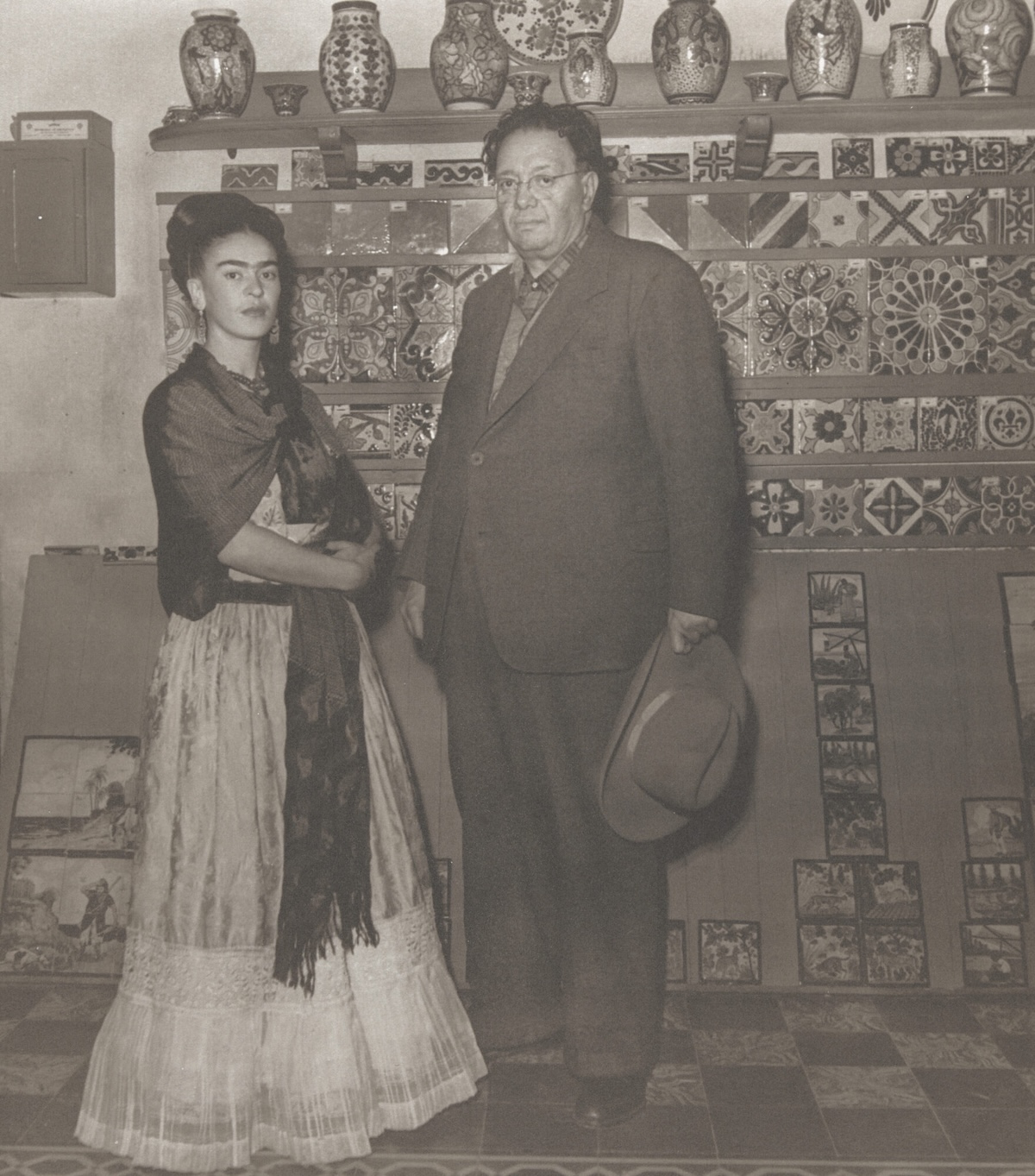
Lola Álvarez Bravo and Leo Matiz’s photographic portraits of both artists also appear in the show. Their presence matters less as documentation than as a reminder that the mythology around these two figures was substantially self-constructed — Kahlo in particular understood image-making as a medium continuous with her painting, not separate from it. Seeing those photographs within Bausor’s theatricalized installation makes that recursive loop visible in a way that a straight documentary hang would not.
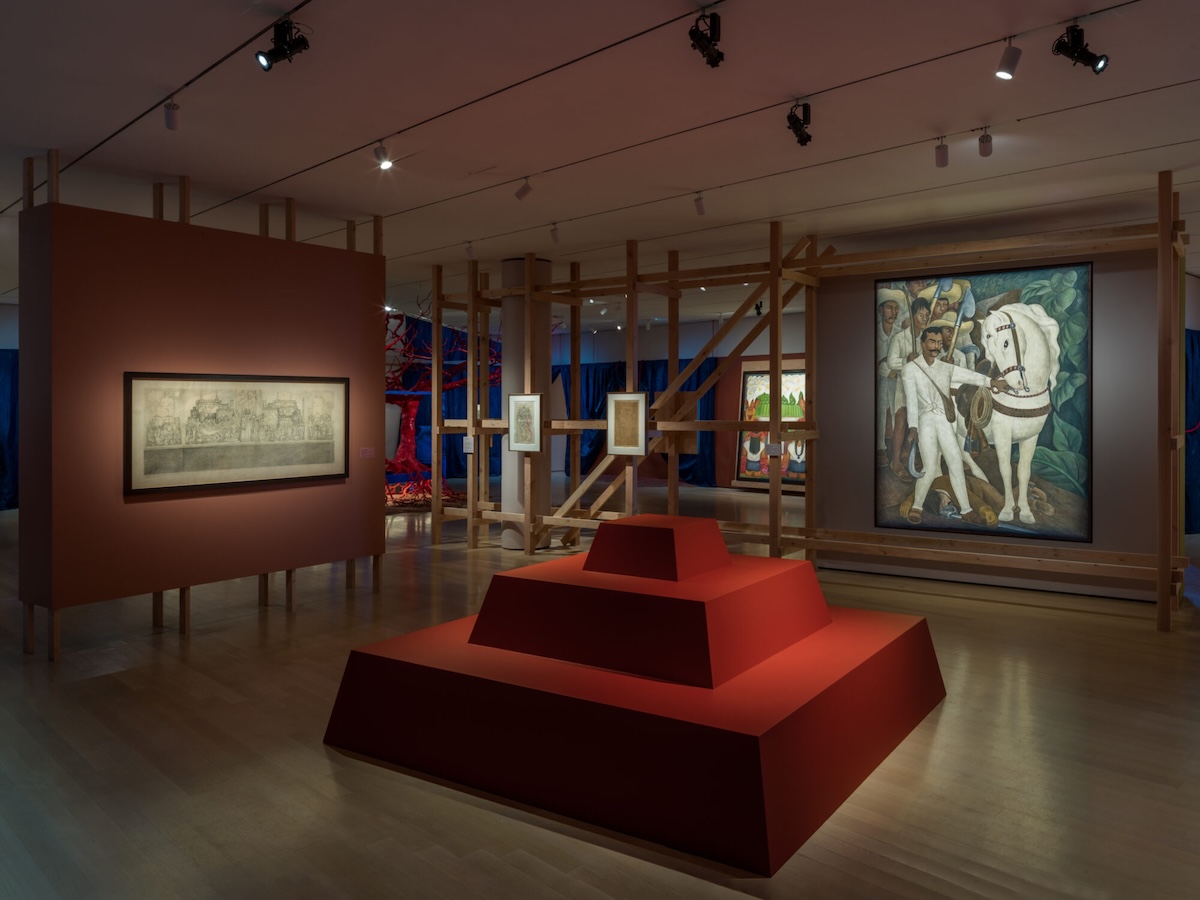
The Frida and Diego MoMA Installation and the Question of Theatrical Staging in Galleries
The legitimate concern with importing opera design logic into a gallery is that it turns the work into backdrop for an atmosphere. That risk is real and it has sunk more than one ambitious “immersive” presentation. What keeps the Frida and Diego MoMA installation from that fate is that Bausor’s frame is porous — it creates a context rather than a spectacle. The paintings remain the event. The staging creates pressure around them rather than substituting for them.
That cross-disciplinary ambition puts this exhibition in conversation with a broader institutional turn — already visible in Latin American art contexts in work like Firelei Báez’s recent Hauser & Wirth exhibition — toward presentations that make meaning through spatial and material intelligence rather than chronological hang and wall text alone.
Frida and Diego MoMA: The Semiquincentennial Frame
There is a further layer worth naming. The Met Opera premiered El Último Sueño de Frida y Diego in 2026 — a Semiquincentennial year in which American institutions are being asked, with varying degrees of seriousness, to reckon with whose histories constitute the American story. Bringing Kahlo and Rivera into this moment, with a Mexican and Mexican-American creative team shaping both the opera and the gallery, is not a coincidence. It is an argument. Whether you find the framing illuminating or heavy-handed is a matter of critical temperament. The paintings are strong enough to survive either reading.
Both halves of this conversation are still open. The Met Opera’s run closes June 5; MoMA’s hangs through September 12 at The Museum of Modern Art, 11 West 53rd Street, New York. The case for seeing them in sequence, while you still can, is a strong one.
Images courtesy of MOMA.
You may also like
-
Made Over Time Puts Two Half-Century Painting Practices in One Room
-
“No Other Place to Go”—5 Artists Turn Climate Data Into Human Experience at InLiquid Gallery
-
Erik Spehn Strips the Ground Away in “Waves Become Wings”
-
Zoya Cherkassky’s American Cooking Turns a Vintage Cookbook Into a Study of Displacement
-
“Shimmer—Dreaming the Posthuman” Argues That Care, Not Extinction, Is the Point